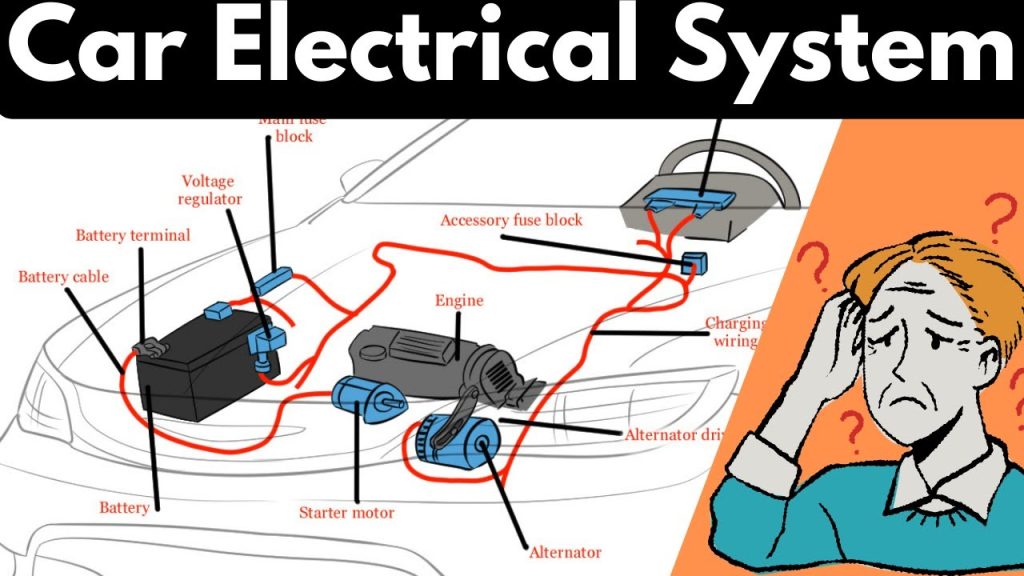
“Just a minor electrical issue, easily fixed”—₹35,000 later, you’re still chasing intermittent failures and blown fuses.
Modern cars have 50-100 electronic control units, kilometers of wiring, and hundreds of sensors. When electrical systems fail, symptoms are mysterious: intermittent starting issues, random warning lights, power windows that work sometimes, infotainment that reboots randomly. Sellers dismiss these as “minor glitches”—but electrical gremlins are expensive to diagnose (₹5,000-15,000) and fix (₹10,000-60,000+).
The trap: Seller knows about electrical issues, resets everything before showing car, hopes problems don’t surface during test drive.
What you’ll learn:
- Battery health testing (load test critical)
- Alternator output verification
- Common electrical failures (body control module, wiring harness)
- Diagnostic approach (what OBD reveals)
- When electrical issues mean flood damage
Section 1: Battery Health Testing
Battery basics:
- Lifespan: 2-4 years (Indian climate)
- Replacement cost: ₹5,000-12,000 (depending on capacity)
Visual inspection:
1. Manufacturing date:
- Sticker on battery top
- Format: MM/YY (e.g., 06/21 = June 2021)
- If >4 years old: Replacement needed soon
2. Physical condition:
- Terminals: Clean, no corrosion (white/green powder)
- Case: No cracks, bulging, leaks
- Corrosion = poor maintenance or overcharging (alternator issue)
Voltage test (basic):
Equipment: Multimeter (₹300-1,000)
Procedure:
- Engine off, all accessories off
- Measure voltage across battery terminals
- Good: 12.4-12.8V
- Weak: 12.0-12.3V (charge and retest)
- Dead: <12.0V (replace)
Load test (critical, better than voltage):
What it tests: Battery’s ability to deliver current under load
Procedure (requires load tester, ₹2,000-5,000):
- Apply load (half of CCA rating for 15 seconds)
- Good: Voltage stays >9.6V
- Weak: Voltage drops <9.6V (replace even if voltage test was OK)
Most sellers skip load test—weak battery passes voltage test but fails under load
Alternator test:
While engine running:
- Measure voltage at battery terminals
- Good: 13.8-14.4V (alternator charging)
- Problem: <13.5V (alternator weak) or >14.8V (overcharging, voltage regulator fault)
Alternator failure cost: ₹10,000-25,000
Section 2: Electrical System Function Tests
Test all electrical components:
Lights (5 minutes):
- Headlights (low, high beam)
- DRLs (daytime running lights)
- Fog lights (front, rear)
- Indicators (all 4 corners + repeaters)
- Brake lights
- Reverse lights
- Interior lights (dome, door courtesy, vanity mirror)
Red flags:
- Dim lights: Voltage drop (alternator or battery weak)
- Flickering: Loose connection, failing alternator
- One side brighter: Ground issue
Power windows (2 minutes):
- Test all 4 windows: Up, down, auto function
- Problem: Slow operation (motor worn, ₹3,000-8,000 per window)
- Problem: Window drops after closing (regulator failure, ₹5,000-12,000)
Central locking (2 minutes):
- Lock/unlock with remote (all doors)
- Lock/unlock with interior button
- Problem: One door doesn’t lock (actuator failure, ₹2,000-5,000 per door)
Infotainment (5 minutes):
- Power on, test all functions
- Radio, USB, Bluetooth, navigation
- Problem: Random reboots (software or module failure, ₹8,000-25,000)
Climate control (2 minutes):
- AC compressor engages
- Blower works at all speeds
- Problem: Blower only works at max speed (resistor failure, ₹1,500-4,000)
Wipers (1 minute):
- Test all speeds, intermittent function
- Problem: Intermittent doesn’t work (wiper relay, ₹500-2,000)
Section 3: Common Electrical Failures
Failure 1: Body Control Module (BCM)
What it controls:
- Lights, wipers, power windows, central locking, instrument cluster
Symptoms:
- Multiple electrical issues simultaneously
- Intermittent failures (work sometimes, fail randomly)
- Warning lights for no reason
Diagnosis:
- OBD scan shows BCM codes (U, B-series)
Repair cost:
- BCM replacement: ₹15,000-40,000
- BCM repair (if possible): ₹8,000-20,000
Failure 2: Wiring harness damage
Causes:
- Rodent damage (rats chew wiring)
- Water intrusion (flood, leaks)
- Age (insulation cracks)
Symptoms:
- Intermittent electrical issues
- Burning smell
- Fuses blow repeatedly
Diagnosis:
- Visual inspection (engine bay, underbody)
- Look for: Exposed wires, chewed insulation, melted wires
Repair cost:
- Minor repair (single wire): ₹1,000-3,000
- Harness section replacement: ₹10,000-30,000
- Complete harness: ₹50,000-1,50,000 (rare, only flood cars)
Failure 3: Fuse box corrosion
Cause:
- Water intrusion (sunroof leak, windshield leak, flood)
Symptoms:
- Multiple circuits fail
- Fuses corroded (green residue)
Diagnosis:
- Open fuse box (under dashboard, under hood)
- Look for: Corrosion, water marks
Repair cost:
- Fuse replacement: ₹500-2,000
- Fuse box replacement: ₹8,000-20,000
Indicates flood damage—walk away
Section 4: OBD Codes for Electrical Issues
Common codes:
U0001-U0300: Communication codes
- U0100: Lost communication with ECM
- U0121: Lost communication with ABS module
- Indicates: Network issue, module failure, wiring problem
B1000-B2000: Body system codes
- B1342: ECM internal fault
- B1479: Battery voltage high (alternator overcharging)
- B1213: Central locking fault
P0562: System voltage low
- Cause: Weak battery, failing alternator, excessive electrical load
P0563: System voltage high
- Cause: Alternator voltage regulator failure
Section 5: Flood Damage Detection
Electrical issues are #1 indicator of flood damage:
Signs of flood:
1. Fuse box corrosion (mentioned above)
2. Rust on electrical connectors:
- Under carpet, check connectors
- Under seats
- Flood water leaves rust/corrosion
3. Water line in interior:
- Check door panels (remove if possible)
- Look for: Silt, water marks at specific height
4. Musty smell:
- Mildew from waterlogged carpets
5. Fogged lights:
- Condensation inside headlights, taillights
- Indicates: Water entered housing
If flood damage suspected:
- Walk away immediately
- Electrical issues will haunt you forever
- Resale value destroyed
Section 6: Intermittent Issues (Hardest to Diagnose)
“It only happens sometimes”:
Common intermittent failures:
1. Car starts sometimes, not others:
- Possible causes: Weak battery, starter motor, ignition switch, immobilizer fault
- Diagnosis cost: ₹5,000-10,000 (labor to test multiple components)
- Repair: ₹8,000-30,000
2. Warning lights come and go:
- Possible causes: Loose sensor connector, intermittent sensor failure
- Diagnosis: OBD freeze frame data (when fault occurred)
3. Power windows work when warm, not when cold:
- Cause: Motor brushes worn (worse when cold)
- Repair: ₹3,000-8,000 per window
Why intermittent issues are deal-breakers:
- Expensive to diagnose (multiple shop visits)
- May never get fully resolved
- Frustration + downtime
Section 7: Real Case – The Electrical Nightmare
2018 Hyundai Verna, 70,000 km, asking ₹8,50,000
Test drive:
During 15-minute drive:
- Car seemed fine initially
- 10 minutes in: Infotainment rebooted randomly
- Buyer noticed dashboard lights flickered briefly
Red flags (subtle)
Detailed inspection:
Battery voltage test:
- Engine off: 12.3V (borderline weak)
- Engine running: 13.6V (alternator OK, but lower end of normal)
Fuse box inspection (under dashboard):
- Found: Slight corrosion on some fuse terminals
- Indicates: Water intrusion at some point
Carpet check:
- Lifted driver side carpet edge
- Found: Dampness, musty smell
OBD scan:
- U0100: Lost communication with ECM (intermittent code, stored 2 weeks ago)
- B1479: Battery voltage high (stored 1 month ago)
Seller questioned:
- “Has car been in flood or had water intrusion?”
- Seller: “No, never”
Buyer’s investigation continued:
Door panels:
- Removed driver door panel
- Found: Silt residue at bottom, water line visible
Diagnosis: Flood damage
Likely scenario:
- Car submerged partially (water to door line)
- Seller dried it out, cleaned visible areas
- Electrical corrosion began
- Intermittent issues started appearing
Repair prognosis:
- Electrical gremlins will continue
- Fuse box replacement: ₹12,000
- Wiring harness likely corroded: ₹30,000-80,000
- Unknown issues may surface: ₹??
Outcome: Buyer walked away
Lesson: Subtle electrical issues = investigate deeper, often reveal flood damage
Conclusion: Electrical Issues Are Money Pits
Clean electrical systems are rare in used cars. Small issues are acceptable. Multiple intermittent failures = run.
Your verification protocol:
Battery test (5 minutes):
- Voltage test (engine off and running)
- Load test (if possible)
- Check manufacturing date
Function test (15 minutes):
- All lights
- All power windows
- Central locking
- Infotainment
- Wipers, climate control
Visual inspection (10 minutes):
- Fuse box (corrosion check)
- Wiring (engine bay, visible areas)
- Connectors (rust, corrosion)
OBD scan (5 minutes):
- U, B, P codes related to electrical
Decision framework:
- All systems work, battery <3 years old, no codes: Proceed
- Battery >4 years old: Negotiate ₹5,000-8,000 discount
- One minor issue (window slow, fuse blown): Negotiate ₹5,000-10,000
- Multiple electrical issues or intermittent problems: Demand ₹30,000-50,000 discount OR walk away
- Flood damage evidence (fuse corrosion, water lines): Walk away immediately
Electrical problems multiply. One issue today = three issues next month. Buy clean or don’t buy.
Key Takeaways
✓ Battery load test reveals true health (voltage test insufficient)
✓ Fuse box corrosion = flood damage indicator (walk away)
✓ Intermittent electrical issues = expensive diagnosis (₹5-15K just to find problem)
✓ Body Control Module failure = ₹15-40K (multiple systems controlled)
✓ OBD codes U0100, B-series = electrical/communication faults (network issues)
✓ Alternator output 13.8-14.4V when running (<13.5V = weak alternator, ₹8-25K replacement)
✓ Rodent damage common (chewed wiring, check engine bay carefully)
Checklist References
- interior#48: Battery condition and age
- interior#84: All electrical component testing
- obd_scan#12: Electrical system fault codes
- interior#91: Fuse box condition (corrosion check)
Related Reading:
Next Steps
Professional electrical diagnostics + battery load test → Complete system check, OBD scan, wiring inspection
Check flood damage history → Insurance claims reveal water damage
One electrical gremlin breeds ten more. Test everything before you buy.