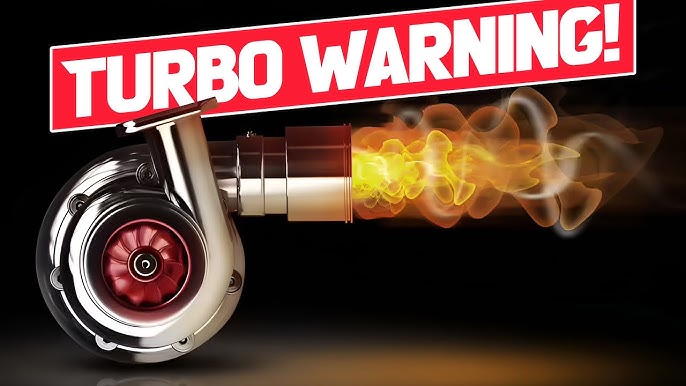
That satisfying turbo whistle sounds exciting—until you realize it’s the sound of ₹80,000-1,50,000 in imminent turbo failure.
Turbocharged engines deliver impressive power from small displacements, but the turbocharger is a precision component spinning at 150,000+ RPM, operating at extreme temperatures. Poor maintenance, aggressive driving, or oil starvation causes turbo failure—and symptoms are often subtle until catastrophic failure. Sellers know the turbo is dying (whistling, reduced power, oil consumption) but hope to sell before it completely fails.
The fraud: Seller masks symptoms with fresh oil change, avoids boost during test drive, sells before expensive turbo replacement needed.
What you’ll learn:
- How turbos fail (oil starvation, bearing wear, compressor damage)
- Diagnostic tests (boost test, sound analysis, oil inspection)
- Early warning signs (lag, smoke, unusual sounds)
- Repair vs replacement costs (₹80K-1.5L)
- High-risk models and maintenance requirements
Section 1: How Turbochargers Work (and Fail)
Basic operation:
1. Exhaust gases spin turbine (hot side)
2. Turbine spins compressor (cold side) via shaft
3. Compressor forces more air into engine (increased power)
Critical components:
Bearings:
- Support shaft spinning at 100,000-250,000 RPM
- Require constant oil supply for lubrication + cooling
- Failure mode: Oil starvation → bearing wear → metal-on-metal contact → catastrophic failure
Seals:
- Prevent oil from entering compressor or turbine
- Failure mode: Worn seals → oil enters combustion (blue smoke) or leaks externally
Compressor wheel:
- Aluminum blades compress incoming air
- Failure mode: Foreign object damage, blade breakage, imbalance
Turbine wheel:
- Withstands 900-1000°C exhaust gases
- Failure mode: Cracked blades, carbon buildup, erosion
Common failure causes:
1. Oil starvation (most common):
- Delayed oil change (dirty oil clogs passages)
- Low oil level
- Immediate shutoff after hard driving (no cooldown)
- Result: Bearings seize, shaft snaps, turbo destroyed
2. Foreign object damage:
- Debris enters intake (dust, leaves, broken air filter)
- Damages compressor blades
- Result: Imbalanced turbo, vibration, bearing failure
3. Exhaust leaks:
- Cracked manifold, loose clamps
- Reduces exhaust pressure to turbine
- Causes carbon buildup on turbine
- Result: Reduced performance, eventual failure
4. Aggressive driving without proper maintenance:
- Hard acceleration from cold start
- Sustained high boost without cooldown
- Result: Accelerated wear, premature failure
Section 2: Turbo Health Diagnostic Tests
Test 1: Visual inspection
Under hood (engine off):
Check turbocharger for:
- Oil leaks: Around turbo housing, oil feed/return lines
- Wet, oily residue = seal failure
- Shaft play: (requires removal of intake pipe)
- Wiggle compressor shaft side-to-side
- Normal: Slight play (1-2mm)
- Problem: Excessive play (>3mm) or grinding feel = bearing wear
- Compressor wheel damage:
- Shine flashlight into intake
- Look for: Bent blades, cracks, impact marks
- Any damage = replacement needed
Exhaust inspection:
- Check for: Cracks in exhaust manifold, loose clamps
- Leak = reduced turbo efficiency + carbon buildup
Test 2: Cold start observation
Procedure:
- Cold start engine (hasn’t run for >4 hours)
- Observe exhaust smoke immediately
Normal:
- Light white smoke for 10-20 seconds (condensation)
- Then clear
Problem:
- Blue smoke (continues after 30 seconds) = Oil burning (turbo seal failure)
- Black smoke (excessive) = Fueling issue or severe carbon buildup
Test 3: Boost test (while driving)
Procedure:
- Drive car at 2,000-2,500 RPM in 3rd gear
- Apply full throttle (safe road conditions)
- Observe:
- Turbo should spool (boost builds) within 1-2 seconds
- Strong acceleration
- Boost gauge (if equipped) reaches normal range (0.8-1.2 bar for most cars)
Normal:
- Immediate power delivery
- Smooth acceleration
- No unusual sounds
Problem:
- Turbo lag >3 seconds (delayed boost) = Worn turbine, exhaust leak
- Weak acceleration (despite high RPM) = Low boost pressure, failing turbo
- Whistling or screeching sound = Bearing wear, compressor damage
Test 4: Sound analysis (critical)
Listen for these sounds:
Normal turbo sounds:
- Whoosh (air rushing through compressor)
- Subtle whistle at high RPM (turbine spinning)
Problem sounds:
1. High-pitched whistle (constant, even at idle):
- Cause: Boost leak (cracked intercooler pipe, loose clamp)
- Or: Compressor wheel damage
- Action: Locate leak, inspect compressor
2. Grinding or rattling:
- Cause: Bearing failure (metal-on-metal contact)
- Action: Immediate turbo replacement needed
3. Siren-like oscillating sound:
- Cause: Compressor surge (air backing up, turbo choking)
- Risk: Can damage compressor wheel
- Action: Check for boost leaks, restricted exhaust
4. Fluttering (on throttle lift-off):
- Normal: If equipped with blow-off valve (releases pressure)
- Problem: If no BOV and fluttering present = compressor surge
Test 5: Oil consumption check
Turbo seal failure causes oil consumption:
Ask seller:
- “How much oil do you add between services?”
- Normal: None, or <0.5L per 10,000 km
- Problem: >1L per 5,000 km = likely turbo seal leak
Check dipstick:
- Oil level low despite recent top-up = consumption issue
- Common cause: Turbo burning oil
Test 6: Intercooler inspection
Intercooler cools compressed air from turbo:
Check for:
- Oil in intercooler: Remove intake pipe after intercooler
- Run finger inside: Should be dry
- If oily/wet: Turbo seals leaking oil into intake (failure imminent)
Section 3: Early Warning Signs (Seller Hiding Issues)
Symptoms sellers try to hide:
1. Reduced power:
- Seller avoids using full throttle during test drive
- “It’s a diesel, takes time to build speed” (lie—turbodiesels accelerate quickly)
- Test: Insist on full-throttle acceleration test
2. Blue smoke on acceleration:
- Seller warms up car before showing (smoke less visible when hot)
- Test: Cold start observation (see Test 2 above)
3. Check Engine light:
- “Just cleared it before you came” (reset without fixing)
- Test: OBD scan reveals P0045, P0234, P0299 (turbo-related codes)
4. Recent oil change:
- Seller changes oil right before showing car (masks oil consumption)
- Check: Ask when last oil change was
- If “yesterday” or “last week” but car has 8,000 km since last service = hiding consumption issue
5. Avoids high RPM:
- Drives gently, shifts early
- “I drive economically” (masking turbo lag or boost issues)
- Test: Insist on driving yourself, test full throttle
Section 4: OBD Codes and Turbo Diagnosis
Turbo-related OBD codes:
P0045 – Turbo/Supercharger Boost Control Solenoid Malfunction:
- Meaning: Wastegate control issue
- Possible cause: Faulty solenoid, vacuum leak, stuck wastegate
- Repair cost: ₹8,000-20,000 (solenoid replacement)
P0234 – Turbo/Supercharger Overboost:
- Meaning: Boost pressure too high
- Possible cause: Stuck wastegate, faulty boost sensor
- Risk: Engine damage if prolonged
- Repair cost: ₹5,000-25,000
P0299 – Turbo/Supercharger Underboost:
- Meaning: Boost pressure too low
- Possible cause: Boost leak, failing turbo, exhaust restriction
- Repair cost: ₹3,000-15,000 (if leak), ₹80,000-1,50,000 (if turbo failure)
P0047 – Turbo/Supercharger Boost Control Solenoid Low:
- Meaning: Electrical issue with boost control
- Repair cost: ₹5,000-12,000
If multiple turbo codes present: High likelihood of turbo failure
Section 5: Repair Costs and Options
Turbo failure repair options:
Option 1: New OEM turbocharger
- Cost: ₹1,20,000-2,50,000 (depending on car)
- Labor: ₹15,000-30,000
- Total: ₹1,35,000-2,80,000
- Warranty: 1-2 years
- Best for: High-value cars, long-term ownership
Option 2: Aftermarket new turbo
- Cost: ₹60,000-1,20,000
- Labor: ₹15,000-30,000
- Total: ₹75,000-1,50,000
- Warranty: 6 months-1 year
- Best for: Budget-conscious, short-term ownership
Option 3: Reconditioned/rebuilt turbo
- Cost: ₹40,000-80,000
- Labor: ₹15,000-30,000
- Total: ₹55,000-1,10,000
- Warranty: 3-6 months (limited)
- Risk: Quality varies, may fail sooner
- Best for: Older cars, low value
Option 4: Repair (bearing/seal replacement)
- Cost: ₹25,000-50,000
- Labor: ₹10,000-20,000
- Total: ₹35,000-70,000
- Feasibility: Only if housing/wheels undamaged
- Risk: May not solve all issues
Additional costs often needed:
- Intercooler cleaning: ₹3,000-8,000 (if oil contamination)
- Oil change + flush: ₹5,000-10,000 (metal debris in system)
- Exhaust manifold repair: ₹8,000-25,000 (if cracked)
Total cost for full turbo failure: ₹80,000-3,00,000
Section 6: High-Risk Models and Maintenance
Models with known turbo issues:
Volkswagen/Skoda 1.2L TSI:
- Issue: Turbo failure at 60,000-1,00,000 km
- Cause: Design flaw, oil consumption
- Cost: ₹1,20,000-1,80,000 (OEM replacement)
Fiat Multijet 1.3L (used in Maruti, Tata):
- Issue: VGT (Variable Geometry Turbo) carbon buildup
- Cause: City driving, short trips
- Symptom: Turbo lag, limp mode
- Cost: ₹60,000-1,00,000 (turbo cleaning or replacement)
Ford EcoBoost engines:
- Issue: Wastegate rattle, turbo seal failure
- Mileage: 80,000-1,20,000 km
- Cost: ₹1,00,000-1,50,000
Hyundai 1.0L Turbo GDI:
- Issue: Premature bearing wear
- Cause: Oil quality sensitivity
- Cost: ₹80,000-1,20,000
Maintenance critical for turbo longevity:
1. Oil change interval:
- Recommended: Every 5,000-7,500 km (NOT 10,000 km for turbos)
- Use: Fully synthetic oil only (5W-30 or as per manual)
- Why: Turbos demand clean, high-quality oil for bearing lubrication
2. Cooldown period:
- After hard driving, idle for 30-60 seconds before shutoff
- Allows oil to circulate, cool turbo bearings
- Modern cars: Often have turbo timer (automatic cooldown)
3. Warm-up:
- Don’t use full boost until oil temperature reaches 80°C
- First 5 minutes: Gentle driving
4. Air filter replacement:
- Every 10,000-15,000 km (more if dusty conditions)
- Why: Dirty filter allows debris into turbo compressor
Section 7: Real Case – The Whistling Polo
2017 Volkswagen Polo GT TSI, listed at ₹7,50,000
Seller’s claim: “Great performance, well-maintained, fun to drive”
Test drive:
Buyer noticed:
- Faint high-pitched whistle at idle
- Whistle louder when accelerating
- Slight hesitation at 2,000 RPM (turbo lag)
Seller’s explanation: “That’s just the turbo sound, it’s normal for GT TSI”
Red flag: Buyer knows whistling at idle isn’t normal
Detailed inspection:
Compressor check:
- Removed intake pipe
- Compressor shaft had 4-5mm side-to-side play (excessive)
- Normal: 1-2mm
Intercooler inspection:
- Finger inside intercooler inlet: Oily residue
- Meaning: Turbo seals leaking oil into intake
Oil consumption:
- Seller admitted: “I add 1L oil every 3,000 km”
- Major red flag: Severe oil consumption (turbo seal failure)
OBD scan:
- Code P0299: Turbo underboost
- Freeze frame data: Code appeared 8,000 km ago (seller ignored)
Diagnosis: Turbo bearing wear + seal failure, replacement imminent
Repair estimate:
- Aftermarket turbo: ₹70,000
- Labor: ₹20,000
- Intercooler cleaning: ₹5,000
- Oil system flush: ₹8,000
- Total: ₹1,03,000
Seller’s response:
- “It’s just a small sound, nothing serious”
- Refused to negotiate below ₹7,20,000
Buyer’s decision:
- Walked away
- Reason: Seller knowingly hiding ₹1L+ repair, dishonest
Lesson: Whistling at idle = bearing wear = ₹80K-1.5L repair imminent
Conclusion: Turbos Demand Respect (and Inspection)
Turbo cars offer amazing performance—when properly maintained. But neglected turbos become financial nightmares.
Your verification protocol:
Visual (10 minutes):
- Check for oil leaks around turbo
- Inspect compressor wheel (flashlight into intake)
- Check intercooler for oil contamination
Driving tests (15 minutes):
- Cold start blue smoke check
- Boost test (full throttle 2nd/3rd gear)
- Sound analysis (whistling, grinding, rattling)
OBD scan (5 minutes):
- Check for turbo-related codes (P0045, P0234, P0299)
- Verify no recent code clears
Documentation:
- Service records showing oil change every 5,000-7,500 km
- Synthetic oil used
- No history of turbo repairs (unless properly documented)
Decision framework:
- No turbo issues, well-maintained: Proceed confidently
- Minor boost leak or sensor fault: Negotiate ₹10,000-20,000 repair discount
- Whistling, shaft play, or oil consumption: Demand ₹80,000-1,20,000 discount OR walk away
- Seller lying about known turbo issues: Walk away immediately
Don’t buy a dying turbo. The whistle isn’t performance—it’s warning.
Key Takeaways
✓ Whistling at idle = bearing wear (₹80K-1.5L repair imminent)
✓ Blue smoke = turbo seal failure (oil burning, replacement needed)
✓ Oil consumption >1L per 5,000 km = turbo leak (check intercooler for oil)
✓ Excessive shaft play (>3mm) = bearing failure (visual inspection critical)
✓ OBD code P0299 (underboost) = failing turbo or boost leak (scan before buying)
✓ Turbo oil change every 5,000-7,500 km with synthetic (10,000 km too long, causes failure)
✓ VW 1.2 TSI, Fiat 1.3 Multijet = known turbo problems (extra scrutiny needed)
Checklist References
- engine#12: Turbocharger inspection (visual, sound, boost test)
- engine#18: Intercooler condition (oil contamination check)
- engine#25: Exhaust manifold cracks (turbo efficiency impact)
- obd_scan#3: Turbo-related fault codes (P0045, P0234, P0299)
- service_history#3: Oil change frequency (critical for turbo longevity)
Related Reading:
Next Steps
Check service history for turbo maintenance → Oil change intervals, turbo repairs, claim history
Professional turbo diagnostics + boost test → Compression test, shaft play measurement, OBD analysis
The turbo whistle isn’t music. It’s the sound of ₹1 lakh leaving your wallet.