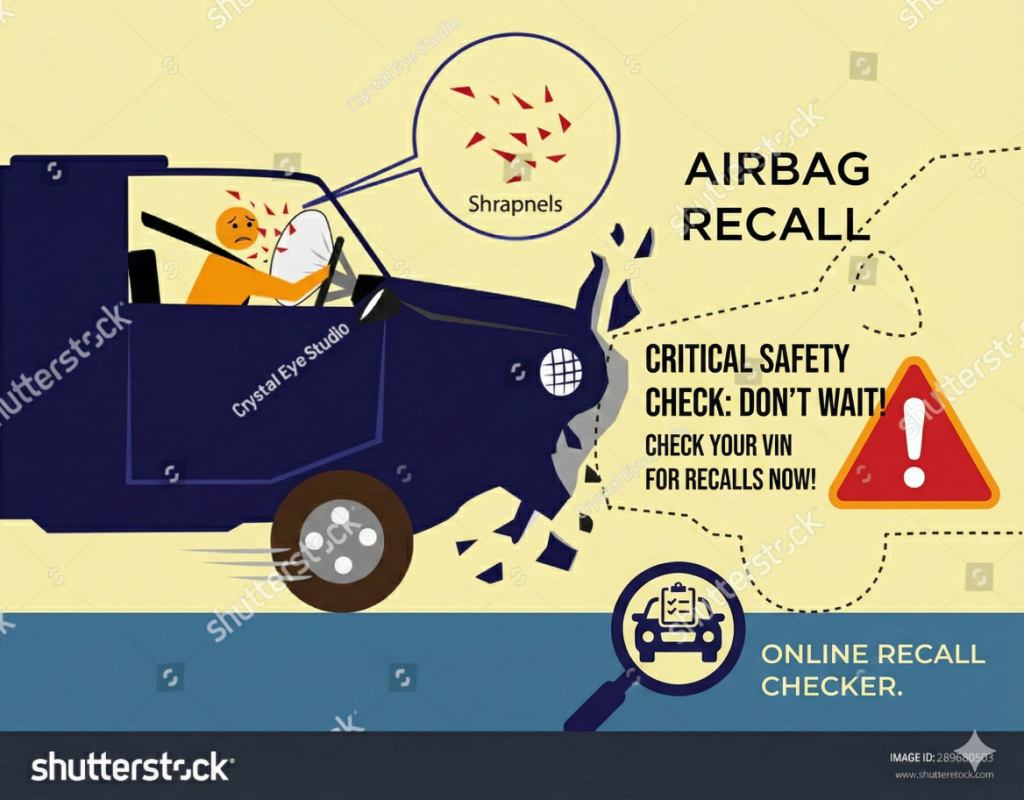
That car looks perfect—until you discover it has an active recall for faulty airbags, and the seller never got the free manufacturer fix.
Vehicle recalls happen when manufacturers discover safety defects affecting entire production batches. The fix is FREE—but only if you know about it. Sellers often ignore recalls (inconvenience, time) and sell cars with unresolved safety issues. You inherit a vehicle with defective airbags, faulty brakes, or fire-risk fuel pumps—problems the manufacturer would fix for free if you’d known.
The risk: You buy a car with active recall, defect causes accident/failure, manufacturer liability expires, you pay ₹50,000-2,00,000 for a repair that should have been free.
What you’ll learn:
- How to check for open recalls (VIN-based search)
- Common recall categories (airbags, fuel systems, software)
- Manufacturer obligations (free repair, no expiry)
- How to verify recall completion
- Impact on safety and resale value
Section 1: Understanding Vehicle Recalls
What is a recall:
When a manufacturer discovers a safety defect or non-compliance with safety standards, they issue a recall. All affected vehicles must be repaired—at manufacturer’s expense.
Types of recalls:
1. Safety recalls:
- Critical safety defects (airbags, brakes, steering)
- Mandatory by law
- Free repair, no time limit
2. Service campaigns:
- Non-safety issues (cosmetic, convenience)
- Voluntary by manufacturer
- May be free or charged, time-limited
3. Software updates:
- ECU, infotainment, emissions software
- Free at service center
- Often unannounced (not formal recalls)
Why recalls matter:
Safety risk:
- Takata airbag recall (2013-2019): Airbags explode, send shrapnel into cabin (multiple deaths worldwide)
- Maruti brake vacuum hose recall (2019): Brake failure risk
- Honda fuel pump recall (2020): Engine stalling risk
Financial loss:
- If recall not completed before warranty expires, some manufacturers won’t cover related failures
- You pay for repair that should have been free
Resale value:
- Buyers check recall status
- Unresolved recalls reduce value 5-10% (safety concern + hassle)
Section 2: How to Check for Recalls
Method 1: Manufacturer website (most reliable)
Step-by-step:
1. Visit manufacturer’s official website
- Maruti: marutisuzuki.com → Customer Care → Recall Campaign
- Hyundai: hyundai.com/in → Customer Care → Safety Recall
- Tata: tatamotors.com → Customer Service → Recall Information
- Honda, Ford, etc.: Similar paths
2. Enter VIN (Vehicle Identification Number)
- 17-digit code on dashboard (visible through windshield)
- Also on RC, door jamb sticker
3. Check results:
- No open recalls: Green/clear message
- Open recall: Details of defect, fix available, nearest service center
Method 2: SIAM website (Society of Indian Automobile Manufacturers)
Visit: siam.in → Vehicle Recall Portal
- Lists all recalls issued in India
- Search by manufacturer, model, year
- Less precise than manufacturer VIN check (shows general recalls, not your specific VIN)
Method 3: Dealer/service center
Call authorized dealer:
- Provide VIN
- Ask: “Are there any open recalls for this vehicle?”
- They check manufacturer database
Method 4: CarQ vehicle history report
- Includes recall status for Indian market
- Cross-references VIN against recall databases
Section 3: Common Recalls in Indian Market
Major recalls 2015-2024:
1. Maruti Suzuki
2019: Brake vacuum hose recall
- Models: Ciaz, Ertiga, XL6 (2018-2019 production)
- Issue: Brake vacuum hose may crack, reduce braking efficiency
- Fix: Replace brake hose (free)
- If not fixed: Brake failure risk
2021: Reclining mechanism recall
- Models: WagonR, Baleno (2020-2021)
- Issue: Front seat reclining mechanism may fail
- Fix: Replace mechanism (free)
2. Hyundai
2020: Seatbelt pretensioner recall
- Models: Grand i10 Nios, Aura (2019-2020)
- Issue: Pretensioners may not deploy properly
- Fix: Replace pretensioner assembly (free)
- Value if not fixed: ₹15,000-25,000 per seat
3. Honda
2018: Takata airbag recall
- Models: City, Civic, CR-V (2013-2017)
- Issue: Airbag inflator may rupture, send metal fragments
- Fix: Replace airbag inflator (free)
- Critical safety risk – multiple deaths globally
2020: Fuel pump recall
- Models: City (2019-2020)
- Issue: Fuel pump may fail, cause engine stalling
- Fix: Replace fuel pump (free)
- Value if not fixed: ₹25,000-40,000
4. Ford
2016: Door latch recall
- Models: EcoSport, Figo, Aspire (2013-2016)
- Issue: Door latch may not engage, door opens while driving
- Fix: Replace latch mechanism (free)
- Safety risk: Door opens during travel
5. Tata
2019: Steering column recall
- Models: Tiago, Tigor (2018-2019)
- Issue: Steering column bush may wear, affect steering
- Fix: Replace bush (free)
6. Volkswagen
2018: DSG transmission recall
- Models: Polo, Vento (2014-2016 with 7-speed DSG)
- Issue: Mechatronic unit fault, transmission failure
- Fix: Software update + component replacement if needed (free)
- Value if not fixed: ₹80,000-1,50,000 (DSG repair)
Section 4: Verifying Recall Completion
If recall found, check if already completed:
Method 1: Service records
- Look for invoice showing recall work
- Should state: “Recall campaign [number], parts replaced, no charge”
Method 2: Call service center
- Provide VIN
- Ask: “Can you confirm if recall [number] was completed for this VIN?”
- They check service history database
Method 3: Physical inspection
- For some recalls, replaced parts have identification (date codes, revision numbers)
- Example: Takata airbag recall – new airbags have specific date codes visible on airbag cover
If recall NOT completed:
Step 1: Contact nearest authorized service center
- Provide VIN
- Schedule appointment
Step 2: Get recall work done (before purchase if possible)
- Free repair – no cost to seller or buyer
- Takes 1-4 hours depending on recall
Step 3: Get completion certificate
- Service center provides document confirming recall completion
- Keep this – proves to future buyers that recall was addressed
If seller refuses to complete recall before sale:
Option A: Negotiate discount
- Inconvenience of dealing with recall = ₹5,000-10,000 discount
- (Even though repair is free, your time isn’t)
Option B: Complete it yourself after purchase
- Bring car to service center with RC (proof of ownership)
- Free repair – manufacturer pays
Option C: Walk away if critical safety recall
- Takata airbag, brake failure, steering defect = life-threatening
- If seller won’t fix before sale = they don’t care about safety
- Red flag for overall maintenance neglect
Section 5: Recalls and Resale Value
Impact on value:
Active recall (not completed):
- Reduces value 5-10%
- Buyer perception: “Seller neglected safety”
- Hassle factor: Buyer must arrange repair
Completed recall:
- No value impact
- Shows responsible ownership
- Proof of completion is selling point
Example:
2019 Honda City VX
- Market value: ₹10,50,000
- Active fuel pump recall (not completed)
- Buyer concern: “What else did they ignore?”
- Negotiated price: ₹9,80,000 (-₹70,000 for hassle + trust reduction)
If recall had been completed:
- No discount
- Faster sale (buyers trust maintenance quality)
Section 6: Manufacturer Obligations
What manufacturers must do:
1. Notification:
- Must inform registered owner (via RC address)
- Often: Email, SMS, letter
- Problem: If RC address outdated or car sold, new owner not notified
2. Free repair:
- Parts + labor at no cost
- No time limit (even if out of warranty)
- Some exceptions: Severe accident damage may void recall repair
3. Loaner vehicle (for extended repairs):
- If recall repair takes >24 hours, some manufacturers provide loaner
- Not guaranteed, varies by brand
What manufacturers are NOT required to do:
1. Compensate for inconvenience:
- You must bring car to service center
- No payment for your time or travel
2. Buy back vehicle:
- Unless extreme safety defect (rare in India)
- In US/Europe, severe recalls trigger buyback programs (not common here)
Your rights:
1. Free repair anytime:
- Even if you’re not original owner
- Even if warranty expired
- As long as recall is active
2. Choose service center:
- Any authorized dealer can perform recall work
- Pick most convenient location
Section 7: Real Case – Ignored Airbag Recall
2016 Honda City i-VTEC SV, listed at ₹7,80,000
Seller’s claim: “Excellent condition, all service done, no issues”
Buyer’s inspection:
Recall check (using VIN on Honda website):
- Result: Active recall – Takata airbag inflator replacement
- Issue date: 2018 (recall issued 2 years before this sale)
- Seller never got it fixed
Buyer asked seller:
- “Did you know about the airbag recall?”
- Seller: “Oh yes, I got a letter, but the car is running fine, didn’t bother”
Red flag: Seller received safety recall notice, ignored it for 2+ years
Takata airbag risk:
- Inflator may rupture on deployment
- Metal shrapnel can injure/kill occupants
- Multiple global deaths from this defect
Buyer’s options:
Option A: Insist seller completes recall before purchase
- Free repair, takes 2-3 hours
- Seller refused (“too busy, buyer can do it”)
Option B: Negotiate discount
- ₹20,000 discount for hassle + safety risk
- Seller agreed to ₹15,000 off
Buyer’s decision:
- Walked away
- Reasoning: If seller ignored critical safety recall for 2 years, what else did they neglect?
- Likely: Skipped services, ignored warning lights, poor maintenance overall
Lesson learned:
- Recall check revealed seller’s negligence
- Saved buyer from buying poorly-maintained car
- ₹15K discount not worth the risk of hidden maintenance issues
Conclusion: Recalls Are Red Flags or Green Lights
Active recall = seller negligence indicator
Completed recall = responsible ownership proof
Your verification protocol:
Pre-purchase (10 minutes):
- Get VIN from RC or dashboard
- Check manufacturer website for recalls
- Check SIAM portal for any additional recalls
If recall found:
- Ask seller if they’re aware
- Request proof of completion (service invoice)
- If not completed, insist on completion before purchase OR negotiate discount
Post-purchase (if you bought with active recall):
- Schedule service appointment
- Get free repair
- Keep completion certificate for resale
Decision framework:
- No recalls: Proceed as normal
- Recall completed with proof: Positive sign (responsible owner)
- Active minor recall (software, cosmetic): Negotiate ₹5K discount or get it done yourself
- Active critical recall (airbag, brake, steering): Demand completion before purchase or walk away
- Seller unaware of recall: Neutral (many owners don’t check)
- Seller aware but ignored for years: Major red flag, walk away
Why recalls matter beyond the defect:
- They reveal owner’s attitude toward maintenance and safety
- Ignored recall = likely ignored services, warning lights, other issues
- Completed recall = diligent owner, well-maintained car
Check recalls. Always. It’s free information that reveals expensive truths.
Key Takeaways
✓ Check VIN on manufacturer website for recalls (free, takes 2 minutes)
✓ Recall repair is FREE, no time limit (even if warranty expired, not original owner)
✓ Takata airbag recall = critical safety risk (multiple global fatalities, must be completed)
✓ Ignored recall = owner negligence indicator (reveals poor maintenance attitude)
✓ Completed recall = positive sign (shows responsible ownership)
✓ Active recall reduces value 5-10% (safety concern + buyer hassle)
✓ SIAM portal lists all Indian recalls (siam.in – general search by model/year)
Checklist References
- pre_work#10: VIN verification and recall status check
- service_history#5: Recall completion documentation
- pre_work#1: RC and VIN matching (for accurate recall lookup)
Related Reading:
Next Steps
Check VIN for active recalls → Instant recall status check across manufacturer databases
Get complete vehicle history → Includes recall status + service history verification
Schedule recall repair at authorized center → Free manufacturer-covered repair coordination
Recalls are free fixes. Check before you buy, save thousands after.