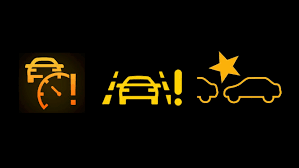
“Lane Keep Assist, Adaptive Cruise Control, Parking Sensors”—premium features that add ₹2,00,000 to price when working, ₹60,000 in repairs when not.
Advanced Driver Assistance Systems (ADAS) use cameras, radar, and sensors to prevent accidents. When functional, they’re lifesavers. When broken, they’re expensive liabilities—and sellers rarely disclose failures. That “ADAS-equipped” car may have non-functional lane assist (₹40,000 camera replacement), failed parking sensors (₹15,000), or adaptive cruise that doesn’t adapt (₹50,000 radar unit).
The trap: Seller lists all ADAS features in ad, you pay premium price, discover after purchase that half the systems don’t work.
What you’ll learn:
- Common ADAS features and how to test each
- Failure modes (camera, radar, sensor issues)
- Repair costs (₹15,000-80,000 per system)
- Warning light interpretation
- Why ADAS failures often mean accident history
Section 1: Common ADAS Features Explained
1. Adaptive Cruise Control (ACC):
What it does:
- Maintains set speed
- Automatically slows when car ahead slows
- Resumes speed when clear
How it works:
- Front radar detects vehicles ahead
- Adjusts throttle/brakes to maintain distance
Failure mode:
- Radar dirty/misaligned → ACC doesn’t detect cars → rear-end collision risk
2. Lane Keep Assist (LKA) / Lane Departure Warning (LDW):
What it does:
- LDW: Warns when you drift out of lane (beep or vibration)
- LKA: Actively steers car back into lane
How it works:
- Windshield-mounted camera reads lane markings
- Alerts or steers if you cross without signaling
Failure mode:
- Camera dirty, cracked windshield, camera misaligned → system non-functional
3. Automatic Emergency Braking (AEB) / Forward Collision Warning (FCW):
What it does:
- Detects imminent collision
- Warns driver (FCW)
- Applies brakes automatically (AEB)
How it works:
- Front camera + radar detect obstacles
- If collision imminent and driver doesn’t react, brakes engage
Failure mode:
- Sensor failure → no automatic braking → crash
4. Blind Spot Monitoring (BSM):
What it does:
- Detects vehicles in blind spots
- Warning light in side mirror
- Alerts with beep if you signal to change lanes
How it works:
- Rear radar sensors (left and right bumper)
Failure mode:
- Sensor damaged → no warning → lane change collision risk
5. Parking Sensors / Rear Cross-Traffic Alert:
What it does:
- Beeps when reversing near obstacles
- Cross-traffic: Warns of cars approaching from sides
How it works:
- Ultrasonic sensors in bumpers
Failure mode:
- Sensors damaged → no warning → parking collision
Section 2: How to Test Each ADAS Feature
Pre-test: Warning light check
Dashboard indicator:
- Many ADAS features have warning lights
- Turn ignition ON: All warnings illuminate briefly
- After engine start: All should turn OFF
- If any stay ON: That system has fault
Test 1: Adaptive Cruise Control
Requirements:
- Open road, light traffic
- Another vehicle ahead (or follow friend’s car)
Procedure:
- Activate cruise control (usually button on steering wheel)
- Set speed (e.g., 80 km/h)
- Approach slower vehicle ahead
- Should happen: Your car automatically slows to match their speed
- Maintain distance (system shows distance setting: usually 1-4 car lengths)
- Slow vehicle speeds up or moves
- Should happen: Your car accelerates back to set speed
Problem:
- Car doesn’t slow (you must brake manually) = ACC not working
- System error message on dashboard = fault
Test 2: Lane Keep Assist / Lane Departure Warning
Requirements:
- Road with clear lane markings
- Safe conditions (straight road, no traffic)
Procedure:
- Activate LKA (button usually on steering wheel or dashboard)
- Drive straight in lane
- Gently drift toward lane edge WITHOUT signaling
- LDW should: Beep or vibrate steering wheel
- LKA should: Gently steer car back to center
Problem:
- No warning when drifting = system not working
- Dashboard shows “LKA unavailable” = camera or calibration issue
Common causes of failure:
- Dirty camera (behind rearview mirror) → clean windshield, test again
- Windshield replaced (camera not recalibrated) → requires dealer calibration (₹8,000-15,000)
Test 3: Automatic Emergency Braking
WARNING: Don’t test by driving at obstacles
Safe test:
- Check if system activates warning
- Drive toward stationary object at low speed (5-10 km/h) in empty parking lot
- Should: Warning beep, possibly automatic braking
- Stop well before contact
Better method:
- Ask seller if AEB works
- Check dash for AEB warning light (system error)
- OBD scan may reveal AEB sensor faults
Problem:
- AEB disabled message = camera/radar fault
Test 4: Blind Spot Monitoring
Procedure:
- Drive on multi-lane road
- Have vehicle in adjacent lane (slightly behind you)
- Should: Warning light in side mirror illuminates
- Signal to change lanes while vehicle in blind spot
- Should: Beep or increased warning
Problem:
- No warning light = sensor failed
- Constant warning (no vehicle present) = sensor malfunction
Test 5: Parking Sensors
Procedure:
- Engage reverse gear
- Approach wall/obstacle slowly
- Should: Beeping increases as you get closer
- Should: Continuous beep when very close (<30 cm)
Check all corners:
- Test reversing toward obstacles on left, right, center
- Some cars have front sensors too (test while moving forward)
Problem:
- No beeping = sensors failed
- Constant beeping (no obstacle) = sensor damaged or dirty
Section 3: Common ADAS Failures and Costs
Failure 1: Windshield camera (LKA, AEB)
Cause:
- Windshield replaced (camera not recalibrated)
- Camera connector loose
- Camera damaged (impact, water intrusion)
Symptoms:
- “LKA unavailable” message
- “AEB system fault” message
- Systems worked before windshield replacement, now don’t
Repair cost:
- Recalibration only: ₹8,000-15,000 (dealer service)
- Camera replacement: ₹35,000-60,000
- Windshield + camera: ₹60,000-1,00,000
Failure 2: Front radar unit (ACC, AEB)
Cause:
- Front-end collision (even minor)
- Radar misaligned
- Radar module failure
Symptoms:
- ACC doesn’t detect vehicles
- “ACC system fault”
- AEB disabled
Repair cost:
- Recalibration: ₹10,000-20,000
- Radar replacement: ₹40,000-80,000 (expensive component)
Failure 3: Blind spot sensors (BSM)
Cause:
- Rear bumper impact
- Sensor damaged during parking
- Wiring corrosion
Symptoms:
- No blind spot warnings
- Constant warnings (false alerts)
- “BSM system fault”
Repair cost:
- Single sensor: ₹8,000-15,000
- Both sides: ₹15,000-25,000
Failure 4: Parking sensors
Cause:
- Sensor cracked (parking impact)
- Wiring damaged
- Sensor dirty (less common)
Symptoms:
- No beeping
- Constant beeping
- Beeping only on some sides
Repair cost:
- Single sensor: ₹2,000-4,000
- Full set (4-8 sensors): ₹10,000-20,000
Section 4: ADAS and Accident History
Why ADAS failures indicate accidents:
Front-end collision:
- Damages: Front radar, windshield camera, front sensors
- Even “minor” 20 km/h collision can misalign radar
- Seller may repair cosmetic damage but skip expensive ADAS recalibration
Rear-end collision:
- Damages: Blind spot sensors, rear parking sensors
Windshield replacement:
- Many sellers replace cracked windshield but skip camera recalibration
- Costs ₹8,000-15,000, they skip to save money
- Result: LKA and AEB don’t work
OBD codes reveal ADAS faults:
Common codes:
- U0126: Lost communication with steering angle sensor (affects LKA)
- U0155: Lost communication with instrument cluster (affects ADAS display)
- C1A13: Adaptive cruise control radar fault
- B1A72: Camera system malfunction
If ADAS codes present:
- High probability of previous accident
- Recalibration or replacement needed
Section 5: Calibration Requirements After Repairs
When ADAS must be recalibrated:
1. After windshield replacement:
- LKA camera must be recalibrated
- Requires: Specialized equipment, dealer or specialist shop
- Cost: ₹8,000-15,000
2. After wheel alignment:
- Some systems use steering angle sensor
- Cost: ₹2,000-5,000 (if not included in alignment)
3. After front-end repair:
- Radar and camera positioning critical (millimeter-level)
- Cost: ₹15,000-30,000
4. After bumper removal/replacement:
- Parking sensors and BSM sensors must be recalibrated
- Cost: ₹5,000-12,000
Red flag:
- Seller claims “windshield replaced last year”
- LKA doesn’t work
- Likely: Seller skipped recalibration (saved ₹10K, you inherit broken system)
Section 6: Decision Framework for ADAS Issues
If ADAS feature not working:
Step 1: Identify fault
- OBD scan for codes
- Visual inspection (camera, radar, sensors)
Step 2: Get repair estimate
- Dealer service quote (most accurate)
- Example: “LKA camera fault, recalibration needed, ₹12,000”
Step 3: Negotiate
Minor fault (parking sensor):
- Repair cost: ₹3,000-5,000
- Negotiation: ₹8,000 discount (repair + inconvenience)
Moderate fault (BSM sensors):
- Repair cost: ₹15,000-25,000
- Negotiation: ₹25,000-35,000 discount
Major fault (radar, camera replacement):
- Repair cost: ₹40,000-80,000
- Negotiation: ₹50,000-1,00,000 discount OR walk away
Multiple ADAS failures:
- Indicates: Previous accident, poor repair quality
- Recommendation: Walk away (repair costs exceed value gained)
Section 7: Real Case – The “ADAS-Equipped” XUV700
2022 Mahindra XUV700 AX7, asking ₹22,00,000
Seller’s ad: “Fully loaded, all ADAS features, like new”
Buyer’s test drive:
ACC test:
- Activated ACC, set 80 km/h
- Approached car ahead
- Result: No automatic slowing, buyer had to brake manually
- Dashboard: “ACC system fault”
LKA test:
- Drifted toward lane edge
- Result: No warning, no steering assist
- Dashboard: “LKA unavailable”
Parking sensors:
- Reversed toward wall
- Result: No beeping until 10 cm away (should start at 1.5 meters)
Red flags: Multiple ADAS failures
OBD scan:
- C1A13: ACC radar malfunction
- B1A72: Camera system fault
- Parking sensor code: Front left sensor failure
Seller confronted:
- “Oh, those features never worked for me either, I don’t use them”
- “Car is still worth full price, engine and everything else is fine”
Buyer’s response:
- “You advertised ADAS features, charged premium for them, they don’t work”
Repair estimate (Mahindra dealer):
- ACC radar unit: ₹65,000
- Camera recalibration: ₹12,000
- Front parking sensor: ₹4,000
- Total: ₹81,000
Negotiation:
- Buyer demanded ₹1,00,000 discount (repair cost + fraud penalty for false advertising)
- Seller refused: “₹21,50,000 final price”
Outcome: Buyer walked away
Lesson: “ADAS-equipped” doesn’t mean ADAS works. Test every feature.
Conclusion: ADAS is Premium Feature, Demand Premium Function
If you’re paying for advanced safety, verify it works. Broken ADAS is worse than no ADAS—you think you’re protected, but you’re not.
Your verification protocol:
Warning light check (2 minutes):
- All ADAS warnings appear at startup, then turn OFF
Feature testing (15 minutes):
- ACC: Follow car, verify automatic slowing
- LKA: Drift test (safe road)
- BSM: Check warning lights with adjacent vehicle
- Parking sensors: Reverse toward obstacle
OBD scan (5 minutes):
- Check for ADAS fault codes (C, U, B series)
Documentation:
- If windshield replaced, ask for recalibration certificate
Decision framework:
- All ADAS works: Proceed, premium justified
- One minor system failed (parking sensor): Negotiate ₹10,000 discount
- Major system failed (radar, camera): Negotiate ₹50,000-1,00,000 OR walk away
- Multiple systems failed: Walk away (previous accident likely)
- Seller advertised ADAS but systems don’t work: Walk away + report fraud
ADAS should enhance safety, not add liability. Test before you trust.
Key Takeaways
✓ Test every advertised ADAS feature (sellers rarely verify functionality)
✓ Windshield replacement requires camera recalibration (₹8-15K cost often skipped)
✓ Front radar failure = ₹40-80K repair (negotiate heavily or walk away)
✓ Multiple ADAS failures = previous accident (alignment and sensors compromised)
✓ OBD codes C1A13, B1A72 = camera/radar faults (expensive repairs)
✓ ADAS recalibration needed after any front-end repair (millimeter-level precision required)
✓ Parking sensor failure = ₹3-5K (acceptable with small discount)
Checklist References
- test_drive#25: ADAS feature testing (ACC, LKA, BSM)
- interior#85: ADAS warning lights check
- obd_scan#11: ADAS system fault codes
- interior#63: Parking sensor functionality
Related Reading:
Next Steps
Professional ADAS diagnostics + calibration check → OBD scan, feature testing, repair estimates
Check accident history for ADAS damage → Front-end collisions often damage radar/camera
ADAS protects you—if it works. Test before you trust your life to it.