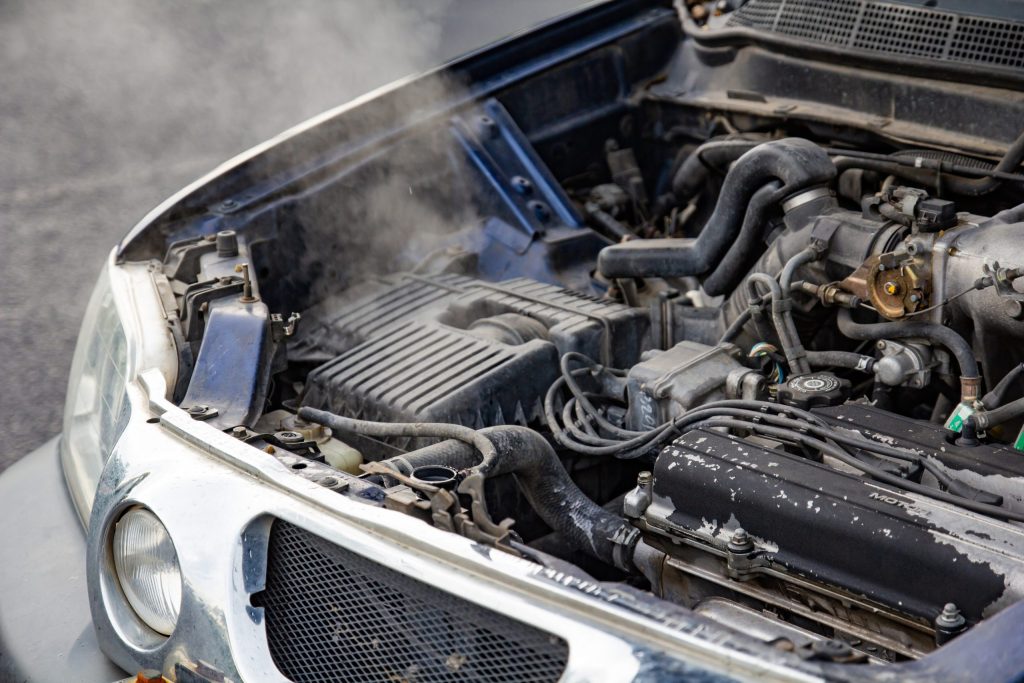
The temperature gauge crept up “just once.” The seller said “no problem.” Three weeks later: Cracked head gasket, warped cylinder head, ₹52,000 repair bill—all from a ₹2,000 coolant flush that was never done.
Why Cooling System Neglect Is Engine Death
You’re inspecting a 2019 Honda City with 68,000 km. Everything looks perfect—clean engine bay, smooth idle, no warning lights. You check the coolant reservoir (plastic tank holding extra coolant). The liquid is brown—not bright green or orange like it should be, but murky brown like rust water.
You: “When was the coolant last changed?”
Seller: “Coolant doesn’t need changing. It’s lifetime fluid.”
You walk away.
Two months later, the same car is relisted at ₹60,000 less. New description: “Engine rebuilt, head gasket replaced, new thermostat, radiator flushed.”
What happened? The brown coolant was full of corrosion (rust from radiator and engine block). The cooling system clogged. The engine overheated. The head gasket (seal between cylinder head and engine block) blew. The cylinder head (top part of engine with valves) warped. Total damage: ₹52,000.
All preventable with a ₹2,000 coolant flush.
In simple terms: The cooling system is like your home air conditioner—it removes heat from the engine and releases it to the air. Without proper maintenance, the system fails, your engine overheats, and catastrophic damage occurs within minutes.
The Financial Reality of Cooling System Failure
Maintenance vs Repair Costs:
| Issue | Cause | Repair Cost |
|---|---|---|
| Coolant flush (prevention) | Regular maintenance | ₹2,000-3,000 |
| Radiator replacement | Clogged/leaking | ₹8,000-15,000 |
| Water pump failure | Age, neglect | ₹6,000-12,000 |
| Thermostat stuck | Age | ₹2,000-4,000 |
| Head gasket failure | Overheating | ₹25,000-50,000 |
| Warped cylinder head | Severe overheating | ₹35,000-60,000 |
| Cracked engine block | Catastrophic overheating | ₹1,00,000+ |
Timeline of overheating damage:
- 1-2 minutes: Coolant boils, pressure builds (reversible, no damage yet)
- 3-5 minutes: Head gasket begins to fail (₹25,000-50,000)
- 5-10 minutes: Cylinder head warps (₹35,000-60,000)
- 10+ minutes: Engine block damage, piston seizure (₹1,00,000+)
The scary part: Modern engines with aluminum blocks and tight tolerances fail FASTER than old cast-iron engines. What took 20 minutes in a 2005 Maruti 800 takes just 5 minutes in a 2020 Honda City.
What You Need to Check
When inspecting a used car’s cooling system, focus on these critical areas:
1. Radiator Condition & Hose Leaks
The radiator (metal grid that cools hot coolant using air) is the heart of your cooling system. A clogged or damaged radiator cannot cool properly, leading to overheating.
Critical checks:
- Coolant color (bright green/orange = good, brown = corrosion)
- Radiator fins (straight and clean vs bent and clogged)
- Hose condition (firm and flexible vs soft/bulging)
- Pressure cap integrity (maintains 14-16 psi pressure)
- Visible leaks (green/orange stains on radiator or hoses)
Complete Radiator & Hose Inspection Guide →
2. Coolant Quality & Contamination
Coolant isn’t just water—it’s a specially formulated fluid that prevents corrosion, raises boiling point, and protects metal surfaces. Old or contaminated coolant is the #1 (closed) cause of cooling system failure.
What coolant color reveals:
- Bright green/orange/pink: Healthy coolant (good condition)
- Brown/rusty: Corrosion in system (flush immediately – ₹2,000-3,000)
- Oily sheen: Head gasket leak (critical – ₹25,000-50,000 repair)
- Milky/frothy: Severe head gasket failure (walk away or negotiate ₹40,000-60,000 discount)
- White particles: Calcium deposits (tap water used instead of proper coolant)
Complete Coolant Quality Check Guide →
3. Temperature Gauge Patterns
Normal gauge behavior:
- Stays at “C” (cold) for first 3-5 minutes after cold start
- Rises steadily to middle (90°C) by 8-10 minutes
- Stays at middle throughout drive
Problem patterns:
- Rises above 2/3 mark: Overheating (pull over immediately)
- Fluctuates up and down: Air pocket or failing thermostat
- Stays at 1/4 mark: Thermostat stuck open (poor fuel economy)
- Reaches “H” mark: Severe overheating (head gasket damage imminent)
Real Case: The “Perfect” Honda City
2019 Honda City asking ₹8.5 lakhs, claimed “never overheated”
CarQ inspection revealed:
- Coolant: Dark brown with slight oily sheen
- Radiator fins: 30-40% bent (undisclosed front-end impact)
- Radiator cap gasket: Cracked
- Upper radiator hose: Soft spots near clamp
Compression test revealed:
- Cylinders 1, 2, 3: 180 psi (normal)
- Cylinder 4: 160 psi (slightly low – early head gasket failure)
Diagnosis: Early-stage head gasket failure, brown coolant from neglected maintenance, damaged radiator from accident.
Repair quote: ₹34,500 (head gasket ₹32,000 + coolant flush ₹2,500)
Buyer’s action: Walked away. Car relisted 2 months later at ₹8.1 lakhs with “head gasket replaced” in description.
Deep Dive Resources
For comprehensive understanding, read these detailed guides:
Radiator & Hose Inspection →
Learn radiator fin assessment, hose squeeze test techniques, pressure cap verification, water pump leak detection, and thermostat function testing.
Coolant Quality Check →
Master coolant color analysis, contamination detection, coolant type compatibility (don’t mix green and orange!), flush timing requirements, and head gasket leak identification.
Your Action Plan
Never buy without this three-layer verification:
- Visual coolant check (free, 5 minutes)
- Open reservoir, observe color
- Check for oily sheen or brown color
- Inspect radiator fins and hoses
- Look for green/orange stains (leaks)
- CarQ vehicle history report (₹1,500-2,500)
- Service records show coolant flush history
- Insurance claims reveal overheating repairs
- Ownership patterns indicate maintenance quality
- Professional inspection (₹2,999)
- Cooling system pressure test
- Compression test (detects head gasket leaks)
- Temperature gauge monitoring during test drive
- Underbody inspection for leak evidence
Total cost: ₹5,000-6,000 What it prevents: ₹25,000-1,00,000 in overheating damage ROI: 400-2,000% return on investment
Key Takeaways
✓ Brown coolant = ₹50,000 problem waiting – Flush immediately (₹2,000-3,000) to prevent radiator clogging and head gasket failure
✓ Oily sheen in coolant = head gasket leak – Critical issue (₹25,000-50,000 repair); don’t buy without major discount
✓ Soft/bulging hoses = imminent blowout – Replace all hoses if car is 5+ years old (₹5,000-6,000 prevents ₹40,000+ damage)
✓ Temperature gauge above 2/3 = overheating – Stop driving immediately; every minute causes ₹10,000+ damage
✓ Coolant change every 2-3 years is mandatory – ₹2,000 flush prevents ₹50,000 overheating catastrophe
✓ Never assume “lifetime fluid” – No coolant lasts forever; sellers lie to avoid spending ₹2,000
Pingback: Engine Health Check: Signs Your ‘Low Mileage’ Car Has Hidden Problems – CarQ – Smarter Used Car Decisions