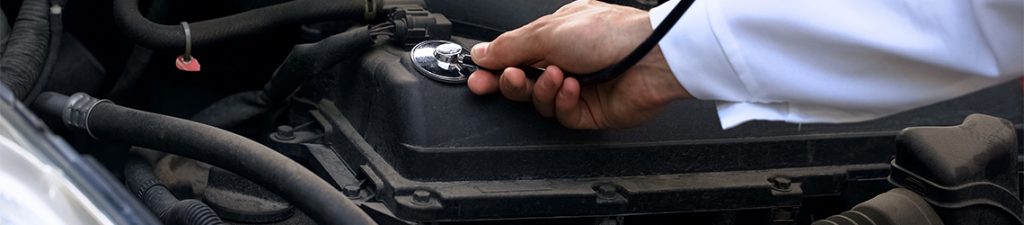
That subtle ticking sound? It’s either a ₹3,000 lifter adjustment or a warning that ₹60,000 in engine damage is 5,000 km away. Here’s how to tell the difference.
You’re standing next to a 2018 Hyundai Creta during the test drive. The seller starts the engine. You hear a faint metallic tapping—almost like someone gently tapping a spoon against a pot. “That’s just normal diesel noise,” the seller assures you. You buy the car. Three months later, the tapping becomes knocking. Then grinding. Mechanic’s diagnosis: “Crankshaft bearing failure. Needs complete engine rebuild. ₹85,000.” That “normal diesel noise” was a death rattle—you just didn’t recognize the language.
Why Engine Noise Matters
In simple terms: Your engine talks to you through sounds. Normal engines hum smoothly. Damaged engines make abnormal noises—each sound tells you exactly what’s failing and how much it will cost.
Financial Reality:
- Early detection (noise stage): ₹2,000-15,000 repairs
- Late detection (after failure): ₹50,000-1,50,000 repairs
- Ignored completely: Total engine replacement (₹80,000-3,00,000)
Knocking Sounds: Walk Away Immediately
What It Sounds Like
Deep, rhythmic metallic knocking—like hammering from inside the engine. Increases with RPM.
In simple terms: Like dropping a wrench into a washing machine—that deep metallic clanging.
What Causes It
Rod bearing wear: Metal sleeves that allow the crankshaft (main rotating shaft) to spin smoothly wear down from low oil pressure or contaminated oil. Metal-on-metal contact destroys the engine.
Wrong fuel (petrol): Low-octane fuel in high-compression engines causes pre-ignition (“pinging”)—fuel ignites too early, creating shock waves.
Costs & Action
- Early stage: ₹30,000-50,000 (bearing replacement)
- Advanced: ₹60,000-1,00,000 (engine rebuild)
- Complete failure: ₹1,50,000-3,00,000 (engine replacement)
If you hear knocking during inspection: WALK AWAY. No discount makes this worth it—the engine is self-destructing.
Ticking Sounds: Normal vs Warning
What It Sounds Like
Light, rapid clicking or tapping—faster than knocking, higher pitched. Like tapping fingernails on a table.
Normal Ticking (Harmless)
Diesel fuel injectors:
- Consistent ticking at idle, speeds up with RPM
- Diesel injectors operate at extremely high pressure, creating mechanical clicking
- Present in ALL diesel engines—completely normal
Direct injection petrol (GDI):
- Modern GDI engines also tick from high-pressure injectors
- Normal operation
Abnormal Ticking (Warning)
Lifter wear:
- What it is: Lifters (tappets) are small components that open/close engine valves
- Sound: Louder ticking, especially when cold, may quiet when warm
- Cause: Low oil pressure, worn lifters, dirty oil
- Cost: ₹8,000-20,000
- Action: Negotiate ₹10,000-15,000 discount
Low oil level:
- Ticking when oil is below MIN mark
- Test: Check dipstick immediately
- Action: If seller’s car has low oil, walk away (indicates neglect)
Timing chain tensioner:
- Ticking/rattling on cold start, quiets after 10-20 seconds
- Cost: ₹15,000-30,000
- Action: Negotiate ₹15,000-20,000 discount
Rattling: Timing Chain vs Heat Shield
What It Sounds Like
Metallic rattle—sounds like shaking a tin can with bolts inside.
Timing Chain Rattle (Serious)
When: Cold start, first 10-30 seconds, then quiets
What it means: Timing chain (metal chain synchronizing valves and pistons) has stretched. Chain tensioner worn. Chain is loose, slapping against cover.
In simple terms: Like a loose bicycle chain rattling—if it slips off, valves and pistons collide, destroying the engine.
Costs:
- Chain replacement: ₹25,000-40,000
- If chain jumps: ₹1,50,000-3,00,000 (total engine failure)
Action: Negotiate ₹30,000-40,000 discount OR walk away
Heat Shield Rattle (Harmless)
When: Specific RPM ranges (1,500-2,000 RPM), persists when warm
What it means: Thin metal heat shields (protecting car from exhaust heat) have loosened
Cost: ₹2,000-5,000
Action: Negotiate ₹3,000-5,000 discount, not a deal-breaker
Squealing: Belts & Pulleys
What It Sounds Like
High-pitched screech—like a bird chirping loudly. During startup or acceleration.
Serpentine Belt Slipping
When: Cold start, turning steering fully, accelerating hard
Cause: Belt worn (cracks, glazing), too loose, or oil-contaminated
If belt fails: No charging (battery dies), no power steering (heavy steering), no water pump (overheats)
Costs:
- Belt only: ₹2,000-4,000
- Plus oil leak repair: ₹7,000-19,000 total
Action: Minor squealing = ₹3,000-5,000 discount; heavy + oil = ₹10,000-20,000 discount
Pulley Bearing Failure
When: Constant squealing, changes pitch with RPM
Cause: Bearings in pulleys (alternator, water pump, idler, tensioner) worn
Costs:
- Idler/tensioner: ₹3,000-8,000
- Alternator: ₹5,000-12,000
- Water pump: ₹8,000-15,000
Action: Negotiate ₹8,000-15,000 discount
Hissing: Vacuum & Boost Leaks
What It Sounds Like
Air hissing—like air escaping from a tire.
Vacuum Leak
When: At idle, causes rough idle or fluctuating RPM
Cause: Vacuum hoses cracked/disconnected. Air entering engine where it shouldn’t, creating lean fuel mixture.
In simple terms: Your engine measures air intake to mix with fuel. A vacuum leak lets extra air sneak in, throwing off the balance.
Cost: ₹2,000-8,000
Boost Leak (Turbo Cars)
When: Under acceleration, when turbo is boosting
Cause: Boost pipes (carrying pressurized air from turbo) leaking. Pressurized air escaping.
Symptoms: Hissing, loss of power, louder turbo whistle
Cost: ₹5,000-15,000 (can cause premature turbo failure – ₹40,000-80,000)
Action: Negotiate ₹10,000-20,000 discount
Key Takeaways
✓ Knocking = walk away: Rod bearing failure costs ₹60,000-1,00,000+
✓ Diesel ticking is normal: Injector noise is mechanical, not a problem
✓ Cold start rattling = timing chain: Negotiate ₹30,000-40,000 discount or walk away
✓ Squealing = belt/pulley: ₹2,000-15,000 repair, check for oil leaks
✓ Always test cold start: Most critical noises appear when engine is cold
Pingback: Engine Health Check: Signs Your ‘Low Mileage’ Car Has Hidden Problems – CarQ – Smarter Used Car Decisions