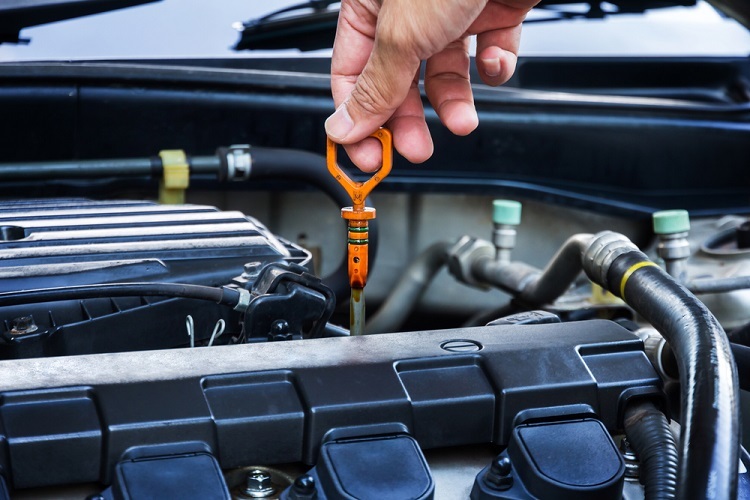
Milky oil means ₹40,000 in head gasket repairs. Metal particles mean ₹80,000 engine rebuild. Both are visible in a 30-second dipstick check—if you know what to look for.
You’re looking at a 2017 Honda City, 62,000 km, asking ₹8.2 lakhs. Everything looks perfect. Fresh detailing, spotless interior, service booklet filled with stamps. You pull the dipstick—oil is jet black, thick like tar, smells burnt. “Just needs an oil change,” the seller says. You buy it. Two weeks later: Engine seizes on highway. Mechanic finds sludge blocking oil passages, worn bearings, damaged rings. “This engine hasn’t had an oil change in 25,000+ km. It’s destroyed.” Repair: ₹92,000. That 30-second dipstick check you skipped would have saved ₹92,000.
Why Oil Analysis Matters
In simple terms: Engine oil is like your car’s blood. Just like a blood test reveals diseases, oil condition reveals engine problems—color, consistency, contamination all tell a story.
Financial Reality:
- Good oil: Engine healthy, no repairs
- Black, thick oil: ₹10,000-25,000 deferred maintenance + potential damage
- Milky oil: ₹25,000-60,000 head gasket repair
- Metal particles: ₹60,000-1,00,000 engine rebuild
- Severe consumption: ₹15,000-80,000 (valve seals to piston rings)
How To Check Oil Properly
- Park on level ground (unlevel gives false reading)
- Engine warm but off (drive 5-10 min, wait 5 min)
- Pull dipstick, wipe clean with white paper towel
- Reinsert fully, pull again (second pull shows true level)
- Read level (between MIN and MAX)
- Observe color/consistency on paper towel
Good oil: Amber to light brown (honey to coffee with milk), smooth flow, mild petroleum smell, can see through it on paper towel.
Problem Oil Indicators
1. Black, Thick Oil (Neglect)
Appearance: Opaque black, tar-like consistency
Means: Severely overdue oil change (15,000-25,000+ km). Combustion soot accumulating, oil additives depleted, sludge forming.
In simple terms: Oil turns black from absorbing soot. When tar-black, it’s saturated—like a sponge that can’t absorb more. No longer protecting engine.
Costs:
- Immediate: ₹3,000-5,000 (oil change + flush)
- Future risk: ₹10,000-25,000 (sludge damage)
- Severe sludge: ₹40,000-80,000
Action: Demand service history. If none, negotiate ₹15,000-25,000 discount or walk away.
2. Milky, Frothy Oil (Head Gasket)
Appearance: Coffee-with-milk color, frothy/foamy texture
Means: Coolant mixing with oil. Head gasket blown (seal between cylinder head and engine block failed), or cracked cylinder head/block.
In simple terms: Oil and water don’t mix. If they’re mixing in your engine, there’s a catastrophic crack or failed seal.
Costs:
- Head gasket: ₹25,000-40,000
- Cylinder head: ₹35,000-60,000
- Block cracked: ₹80,000-1,50,000 (engine replacement)
Action: WALK AWAY IMMEDIATELY. No negotiation worth it unless 50%+ discount AND you accept immediate ₹40,000-60,000 repair.
3. Metal Particles (Internal Wear)
Appearance: Glittery, metallic flakes (like glitter), feels gritty
Means: Internal engine components grinding together. Bearings, piston rings, valve train wearing. Engine eating itself.
In simple terms: Metal particles mean your engine is self-destructing. Every revolution creates more metal shavings, which damage more components—a death spiral.
Costs:
- Minor: ₹15,000-30,000 (bearing replacement)
- Severe: ₹60,000-1,00,000 (rebuild)
- Terminal: ₹1,50,000-3,00,000 (replacement)
Action: WALK AWAY. Engine is failing.
4. Thin, Watery (Fuel Dilution)
Appearance: Very thin, runs off dipstick like water, strong fuel smell
Means: Fuel leaking into crankcase. Failed injectors (diesel), faulty fuel pressure regulator (petrol), or worn piston rings.
In simple terms: Oil needs thickness to create protective film. When fuel mixes in, it thins the oil—too thin to protect.
Costs:
- Diesel injectors: ₹15,000-40,000
- Fuel regulator: ₹8,000-18,000
- Piston rings (worst): ₹50,000-80,000
Action: Professional diagnosis needed. Negotiate ₹20,000-40,000 discount, or walk if rings are cause.
5. Burnt Smell (Overheating)
Smell: Acrid, burnt (like burning rubber)
Means: Engine overheated, oil degraded from heat, possible internal damage
Costs: ₹10,000-80,000 depending on damage
Action: Check coolant system, check for head gasket symptoms. Negotiate ₹15,000-30,000 minimum.
Oil Level & Consumption
Above MAX: Overfilled OR coolant/fuel mixing. Causes foaming. Check if milky/fuel smell.
Between MIN-MAX: Ideal—normal maintenance.
Below MIN: Consumption (burning oil—worn rings/seals) OR leak OR neglect. Ask: “How often top up?” Normal = never/once per 10,000 km. Problem = every 1,000-2,000 km (₹15,000-80,000).
Way below MIN: Walk away—severe neglect or major leak.
Consumption symptoms: Blue smoke from exhaust (startup/acceleration), chronic low oil.
Leak Detection
Where to look: Valve cover (top—₹5,000-10,000), front seal/timing cover (₹10,000-20,000), oil pan (underbody—₹8,000-15,000), rear main seal (₹15,000-25,000)
Severity:
- Seepage: Light residue, no dripping (₹5,000-8,000 discount)
- Active drip: Visible drops, small puddles (₹8,000-15,000 discount)
- Heavy leak: Large area coated, steady drip (₹15,000-30,000 or walk)
“Too Clean Engine Bay” Red Flag: Showroom-level clean in 5-year-old car = hiding leaks/maintenance. You want light dust, minor staining, service stickers—not filthy (neglect) or spotless (hiding issues). Check underbody if too clean.
Key Takeaways
✓ Milky oil = walk away: Head gasket costs ₹25,000-60,000
✓ Black, thick oil = neglect: Budget ₹15,000-25,000 for deferred maintenance
✓ Metal particles = engine failure: Rebuild ₹60,000-1,00,000, walk away
✓ Oil below MIN = red flag: Consumption or neglect
✓ Too-clean engine = suspicious: Check underbody for hidden leaks
✓ Always do dipstick check: 30 seconds saves ₹50,000-1,00,000
Pingback: Engine Health Check: Signs Your ‘Low Mileage’ Car Has Hidden Problems – CarQ – Smarter Used Car Decisions