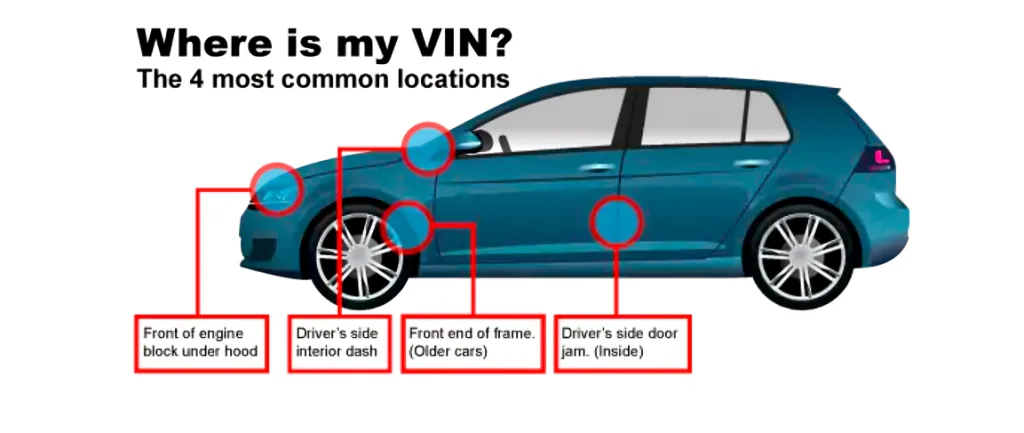
A 17-character code hides in 5-7 places on your car. Miss even one location, and you could be buying a ₹8 lakh stolen vehicle.
Most buyers check the windshield VIN, compare it to the RC (Registration Certificate – your official vehicle ownership document), and assume they’re safe. But professional fraudsters replace visible VINs while hidden chassis numbers (VIN stamped directly on the vehicle’s metal frame) still reveal the truth. The underbody VIN that takes 5 minutes to check? That’s what exposes ₹9 lakh fraud schemes.
Understanding VIN Structure
Example: MA3ERC82S00L12345
- 1-3: Manufacturer (
MA3= Maruti India) - 4-8: Model details (body, engine, variant)
- 9: Check digit (validates VIN authenticity)
- 10: Year (
L=2020,M=2021,N=2022,P=2023) - 11: Factory location
- 12-17: Unique serial number
In simple terms: The VIN reveals manufacturer, model, year, factory, unique number—impossible to fake without sophisticated equipment.
The 5 Primary VIN Locations
1. Windshield VIN Plate
Location: Lower driver’s-side corner of windshield, visible from outside
What to Check:
- ✅ Clear stamping, flush plate, factory rivets (smooth, aged)
- ✅ All characters same font, size, depth
- ❌ Fresh scratches around plate
- ❌ Plate misaligned or loose
- ❌ New-looking rivets on old car
Why It Matters: Easiest to check but also easiest to replace. Never rely on this alone.
2. Driver’s Door Jamb (B-Pillar Sticker)
Location: Open driver’s door, look at pillar between front/rear doors
What to Check:
- ✅ Sticker edges sealed (factory stickers have clean edges)
- ✅ Print quality crisp
- ✅ Manufacturing date matches claimed year
- ❌ Peeling corners or re-glued edges
- ❌ Blurry text
- ❌ Sticker too new for vehicle age
- ❌ Multiple stickers layered
In simple terms: This FMVSS sticker (Federal Motor Vehicle Safety Standards – manufacturer’s certification label) includes VIN, manufacturing date, tire specs. Harder to fake convincingly than windshield plates.
3. Engine Bay Chassis VIN
Location: Under hood, stamped on firewall (back of engine bay) or chassis rail
How to Find:
- Open bonnet
- Look toward back of engine bay (engine meets cabin)
- VIN stamped directly into metal (not plate)
- Use torch and cloth if dirty
What to Check:
- ✅ Stamping depth uniform
- ✅ Characters aligned
- ✅ Metal smooth around VIN
- ❌ Grinding marks around VIN
- ❌ Welding near VIN
- ❌ Stamping depth varies
- ❌ Fresh stamping on old chassis
- ❌ Paint overspray covering VIN
Why It Matters: Stamped directly into frame—much harder to alter than plates.
4. Underbody Chassis VIN (Most Reliable)
Location: Under car, stamped on chassis frame near front/rear axle
What to Check:
- ✅ Matches all other locations exactly
- ✅ No grinding or welding
- ✅ Frame paint consistent
- ❌ Metal work near VIN
- ❌ Fresh undercoating over VIN
In simple terms: This is the gold standard. Nearly impossible to alter without obvious evidence. Professional thieves replace windshield/door VINs but can’t easily access underbody.
Why Professional Help Needed: Requires vehicle lift. CarQ inspection includes underbody VIN verification with photos.
5. Registration Certificate (RC)
Location: Official vehicle registration document
What to Check:
- ✅ RC is original (RTO stamp, watermark, hologram)
- ✅ VIN matches all physical locations exactly
- ✅ Vehicle description matches car (model, year, color)
- ❌ VIN differs by even 1 character
- ❌ RC looks photocopied/laminated
- ❌ Details mismatch (RC says “red,” car is “white”)
Additional VIN Locations
Other locations: Insurance documents, under rear seat (some models), spare wheel well, engine block (engine number).
In simple terms: Legitimate vehicles have matching numbers across all locations. Fraudsters rarely alter every spot.
The 5-Minute Quick VIN Check
For initial screening:
Step 1: Windshield VIN (30 sec)
- Note first 5 and last 5 characters
- Photograph plate
Step 2: Door Jamb VIN (30 sec)
- Compare first 5 and last 5 with windshield
- Check sticker condition
Step 3: RC Document (1 min)
- Full character-by-character comparison
- All 17 must match exactly
Step 4: Photos (1 min)
- Clear photos of all visible VINs
- Photo of RC
Step 5: Online Check (2 min)
- Run VIN through CarQ search
- Verify registration, model details
- Check theft reports
Decision:
- ✅ All match: Proceed with detailed inspection
- ❌ Any difference: Walk away immediately
Real Case: The Hidden Underbody VIN
2018 Brezza, ₹7.8 lakhs (₹1.2 lakhs below market)
Windshield and door VINs matched RC perfectly. But CarQ inspection found engine bay VIN ground off and underbody VIN completely different. Truth: Two vehicles welded together—front from scrapped car with clean papers, rear from wrecked car. Buyer walked away. Saved: ₹7.8 lakhs
VIN Location Reliability Ranking
Most to Least Tamper-Proof:
- Underbody Chassis (95%) – Requires lift, alteration leaves evidence
- Engine Bay Chassis (85%) – Direct stamping, UV shows tampering
- Door Jamb Sticker (60%) – Can be replaced but hard to fake well
- Windshield Plate (40%) – Easiest to alter, most common fraud point
In simple terms: Harder for you to access = harder for criminals to alter. Always prioritize underbody verification.
Key Takeaways
✓ Check all 5 primary locations: Windshield, door jamb, engine bay, underbody, RC—all must match exactly ✓ Decode VIN structure: First 3 = manufacturer, 4-8 = model, 10 = year, 12-17 = unique number ✓ Underbody VIN is king: Hardest to alter, most reliable ✓ Zero tolerance: Even 1 character different = walk away ✓ Professional inspection essential: DIY misses 60% of tampering ✓ Online verification first: ₹299 CarQ search saves wasted trips
Pingback: VIN Verification: Your First Line of Defense Against Used Car Fraud – CarQ – Smarter Used Car Decisions