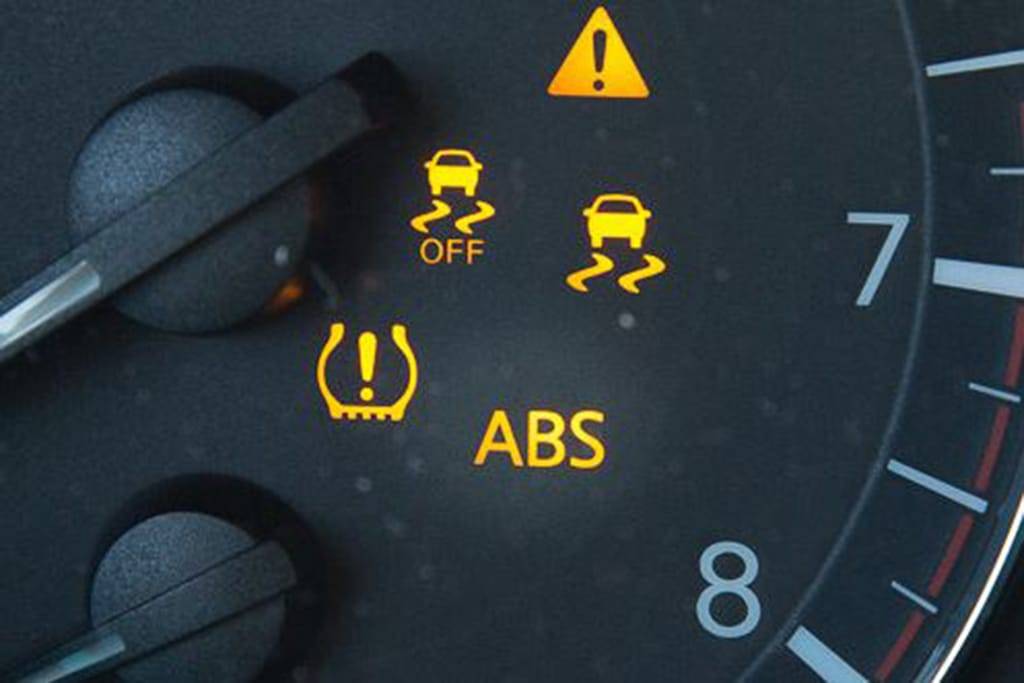
That ABS warning light seems harmless—until you brake hard on wet road and wheels lock, sending you into oncoming traffic.
Anti-lock Braking System (ABS) prevents wheel lockup during hard braking, maintaining steering control. When ABS fails, you lose this critical safety feature—brakes still work, but wheels lock under hard braking, eliminating steering ability. Sellers know the ABS light is on (₹15,000-40,000 repair) but hope you won’t test it or notice until after purchase.
The trap: ABS light OFF during test drive (seller reset code), but system doesn’t actually work. You discover failure when emergency braking needed.
What you’ll learn:
- How ABS works (wheel speed sensors, modulator)
- Testing ABS function (safe brake test)
- Common ABS failures (sensors, module)
- Repair costs (₹8,000-60,000 depending on issue)
- Why driving without ABS is dangerous
Section 1: How ABS Works
Basic operation:
Traditional brakes (no ABS):
- You press brake pedal hard
- Wheels lock (stop rotating)
- Result: Straight-line slide, no steering control
With ABS:
- You press brake pedal hard
- Wheel speed sensors detect wheel about to lock
- ABS modulator rapidly releases and reapplies brake pressure (10-15 times per second)
- Result: Wheels keep rotating, you maintain steering control
Key components:
1. Wheel speed sensors (4 total, one per wheel):
- Magnetic sensors read wheel rotation speed
- Send data to ABS control module
- Most common failure point (₹3,000-8,000 per sensor)
2. ABS control module (ECU):
- Computer processes sensor data
- Commands modulator to pulse brakes
- Failure cost: ₹20,000-40,000 (replacement)
3. Hydraulic modulator:
- Solenoid valves that rapidly release/apply brake pressure
- Failure cost: ₹30,000-60,000 (replacement, often combined with module)
4. Brake pedal pulsation:
- When ABS activates, you feel rapid pulsing in brake pedal
- This is normal during ABS operation (don’t lift off brake)
Section 2: How to Test ABS Function
Pre-test check:
1. ABS warning light:
- Turn ignition ON (engine off)
- Normal: ABS light illuminates for 2-3 seconds, then turns OFF
- Problem: Light stays ON = ABS fault (system disabled)
2. Start engine:
- Normal: ABS light remains OFF after engine starts
- Problem: Light ON = active fault
If ABS light is ON, system is NOT functional (test unnecessary, proceed to diagnosis)
Safe ABS activation test (if light OFF):
IMPORTANT: Only perform in safe, traffic-free area (empty parking lot)
Procedure:
1. Find safe location:
- Large empty parking lot or closed road
- Dry pavement (for initial test)
2. Accelerate to 40 km/h
3. Apply hard brake (full pedal pressure):
- Press brake pedal firmly and quickly
- Keep steering straight
What should happen (normal ABS):
1. Brake pedal pulsing:
- Rapid pulsation felt in pedal (10-15 pulses per second)
- Sound: Grinding or buzzing from under hood (ABS pump)
2. Car stops in straight line:
- No wheel lockup
- Tires don’t screech
- Car decelerates smoothly
3. Steering remains functional:
- You can turn steering wheel while braking
- Car responds to steering input
What happens if ABS failed:
1. No pedal pulsation:
- Pedal feels solid, no pulsing
- Indicates: ABS not activating
2. Wheels lock:
- Tires screech
- Car slides instead of controlled stop
3. Steering does nothing:
- Turning wheel doesn’t change direction
- Dangerous: Can’t avoid obstacles
Wet surface test (advanced):
If possible, test on wet surface:
- ABS more likely to activate (lower traction)
- Brake at 40 km/h on wet pavement
- Should: Feel ABS pulsing immediately
Section 3: Common ABS Failures
Failure 1: Wheel speed sensor (most common)
Symptoms:
- ABS light ON
- OBD code: C1095, C1145, C1155 (specific to wheel position)
- May be intermittent: Light comes on over bumps, then turns off
Cause:
- Sensor coated in dirt/brake dust
- Sensor damaged (impact from road debris)
- Wiring corroded
Diagnosis:
- OBD scan reveals which wheel sensor failed
- Example: C1145 = Right front wheel speed sensor
Repair cost:
- Sensor cleaning: ₹500-1,000 (if dirty)
- Sensor replacement: ₹3,000-8,000 (per sensor, parts + labor)
Failure 2: ABS control module
Symptoms:
- ABS light ON
- Multiple sensor codes (all 4 wheels showing errors)
- OBD code: C1201 (ABS control module fault)
Cause:
- Module failure (electronics)
- Corrosion from water intrusion
- Age (10+ year old cars)
Repair cost:
- Module replacement: ₹20,000-40,000 (OEM)
- Refurbished module: ₹12,000-20,000 (limited warranty)
Failure 3: Hydraulic modulator
Symptoms:
- ABS light ON
- Grinding noise when braking (ABS trying to activate but valve stuck)
- Brake pedal feels spongy
Cause:
- Internal valve failure
- Contaminated brake fluid (moisture causes corrosion)
Repair cost:
- Modulator replacement: ₹30,000-60,000
- Often sold as “ABS unit” (module + modulator combined)
Failure 4: Wiring/connector issues
Symptoms:
- Intermittent ABS light (on/off randomly)
- ABS light ON after going through water/puddle
- Code clears, returns later
Cause:
- Corroded connector at wheel sensor
- Damaged wiring harness
Repair cost:
- Connector repair: ₹1,500-3,000
- Wiring harness replacement: ₹5,000-12,000
Section 4: OBD Codes for ABS
How to scan ABS codes:
Standard OBD-II scanner may not read ABS codes
- Need: Enhanced scanner or dealer-level tool
- Alternatively: CarQ inspection includes ABS code reading
Common ABS codes:
C1095 – ABS Pump Motor Circuit Failure:
- Meaning: Hydraulic pump motor failed
- Repair: Module replacement (₹25,000-50,000)
C1145 – Right Front Wheel Speed Sensor:
- Meaning: Right front sensor not reading correctly
- Repair: Sensor replacement (₹3,000-8,000)
C1155 – Left Front Wheel Speed Sensor:
- Meaning: Left front sensor fault
- Repair: Sensor replacement (₹3,000-8,000)
C1201 – ABS Control Module Malfunction:
- Meaning: Module internal failure
- Repair: Module replacement (₹20,000-40,000)
C1233 – Left Front Wheel Speed Sensor Input Circuit Failure:
- Meaning: Wiring issue (not sensor itself)
- Repair: Wiring harness repair (₹2,000-8,000)
Section 5: Driving Without ABS (Why It’s Risky)
“Brakes still work, so it’s fine”—wrong.
Scenarios where ABS critical:
Scenario 1: Emergency braking on wet road
Without ABS:
- You brake hard
- Wheels lock
- Car slides straight (even if you turn steering)
- Result: Hit obstacle you tried to avoid
With ABS:
- You brake hard
- ABS prevents lockup
- You steer around obstacle
- Result: Collision avoided
Scenario 2: Braking while turning
Without ABS:
- Braking mid-turn causes rear wheels to lock
- Result: Car spins (loss of control)
With ABS:
- ABS manages wheel speeds
- Car remains stable during braking in turn
Scenario 3: Uneven surfaces (gravel, sand)
Without ABS:
- One wheel on gravel, one on pavement
- Brake hard = car pulls to one side violently
- Result: Loss of control
With ABS:
- Adjusts braking force per wheel
- Car stops straight
Statistics:
- ABS reduces crash risk by 18% (NHTSA study)
- Reduces fatal crashes by 6%
Section 6: Advanced Braking Systems (EBD, BA, ESC)
Modern cars have additional systems built on ABS:
1. EBD (Electronic Brake-force Distribution):
What it does:
- Automatically adjusts brake force front vs rear (based on load)
- Prevents rear wheel lockup when trunk heavily loaded
Indicator:
- No separate warning light (uses ABS light)
- Failure: Same as ABS failure (system disabled)
2. BA (Brake Assist):
What it does:
- Detects emergency braking (rapid pedal press)
- Automatically applies maximum brake force
- Reduces stopping distance 20-45%
How to test:
- Brake hard suddenly (safe area)
- Should: Feel system “boost” braking force
Indicator:
- No separate warning light
- Failure: Car has “BA” badge but you don’t feel assist
3. ESC (Electronic Stability Control):
What it does:
- Detects skidding/loss of control
- Automatically applies brakes to individual wheels to stabilize car
Indicator:
- Separate ESC warning light (car with squiggly lines)
- Failure: ESC light ON (system disabled)
Dependencies:
- All require ABS to function
- If ABS fails, EBD/BA/ESC also disabled
Section 7: Negotiation for ABS Issues
If ABS light is ON:
Step 1: OBD scan (identify specific fault)
If wheel speed sensor:
- Repair cost: ₹3,000-8,000
- Negotiation: Demand ₹10,000 discount (repair + inconvenience)
If ABS module:
- Repair cost: ₹20,000-40,000
- Negotiation: Demand ₹30,000-50,000 discount
If hydraulic modulator:
- Repair cost: ₹30,000-60,000
- Negotiation: Demand ₹40,000-70,000 discount OR walk away
Step 2: Seller’s response
If seller offers to repair:
- Acceptable: If done at authorized dealer, invoice provided
- Verify: ABS light OFF after repair, test drive confirms ABS works
If seller refuses to repair:
- Stand firm: “ABS is safety-critical, light ON = system non-functional, price must reflect repair cost”
Section 8: Real Case – The Silent ABS Failure
2019 Hyundai Venue, 55,000 km, asking ₹9,50,000
Test drive:
Buyer noticed:
- ABS light OFF (appeared normal)
- Gentle braking felt normal
Buyer’s ABS test (parking lot):
- Accelerated to 40 km/h
- Applied hard brake
- Result: Wheels locked, tires screeched, NO pedal pulsation
- ABS did NOT activate
Red flag triggered
OBD scan:
- Code C1201: ABS control module malfunction
- Freeze frame: Code first appeared 12,000 km ago
- ABS light status: OFF (seller reset code before showing car)
Seller confronted:
- “ABS light is off, system must be working”
- Buyer: “I tested it, wheels locked, code scan shows module failure”
Seller admitted:
- “Light was on a few months ago, I reset it”
- “ABS not necessary, brakes work fine”
Diagnosis:
- ABS module failed
- Seller reset light to hide issue
Repair estimate (Hyundai dealer):
- ABS control module: ₹32,000
- Labor: ₹5,000
- Total: ₹37,000
Negotiation:
- Buyer demanded ₹50,000 discount (repair + fraud penalty)
- Seller refused
Outcome: Buyer walked away
Lesson: ABS light OFF doesn’t mean ABS works. Physical test reveals truth.
Conclusion: ABS is Non-Negotiable Safety
Modern braking systems are complex, critical, and expensive to repair. Test before you trust.
Your verification protocol:
Warning light check (1 minute):
- Ignition ON: ABS light illuminates, then OFF
- Engine start: ABS light remains OFF
OBD scan (5 minutes):
- Check for ABS codes (C-series)
- Even if light OFF, codes may be stored
Physical ABS test (if light OFF, 5 minutes):
- Safe area, 40 km/h, hard brake
- Should: Pedal pulsing, grinding sound
- Problem: Wheels lock, no pulsing = ABS failed
Decision framework:
- ABS functions normally, no codes: Proceed
- ABS light ON, wheel sensor fault: Negotiate ₹10,000 discount
- ABS light ON, module fault: Negotiate ₹30,000-50,000 discount
- ABS light OFF but system doesn’t work (reset fraud): Walk away
Don’t compromise on safety systems. ABS isn’t a luxury—it’s life-saving.
Key Takeaways
✓ ABS light OFF doesn’t mean ABS works (seller may have reset code)
✓ Test ABS with hard brake at 40 km/h (safe area, should feel pedal pulsing)
✓ Wheel speed sensor = common failure (₹3-8K repair, acceptable)
✓ ABS module failure = ₹20-40K repair (demand deep discount or walk)
✓ C1201 OBD code = module malfunction (expensive repair needed)
✓ ABS failure disables EBD, BA, ESC (multiple safety systems lost)
✓ Enhanced OBD scanner needed for ABS codes (standard scanner may not read)
Checklist References
- interior#4: ABS warning light check
- obd_scan#9: ABS system code reading
- test_drive#15: Brake system testing (ABS activation)
- test_drive#22: Emergency braking test (safe conditions)
Related Reading:
Next Steps
Professional ABS diagnostics + function test → OBD scan, physical testing, repair estimates
Check service history for ABS repairs → Previous ABS issues indicate recurring problems
ABS saves lives in emergencies. Test it before you need it.