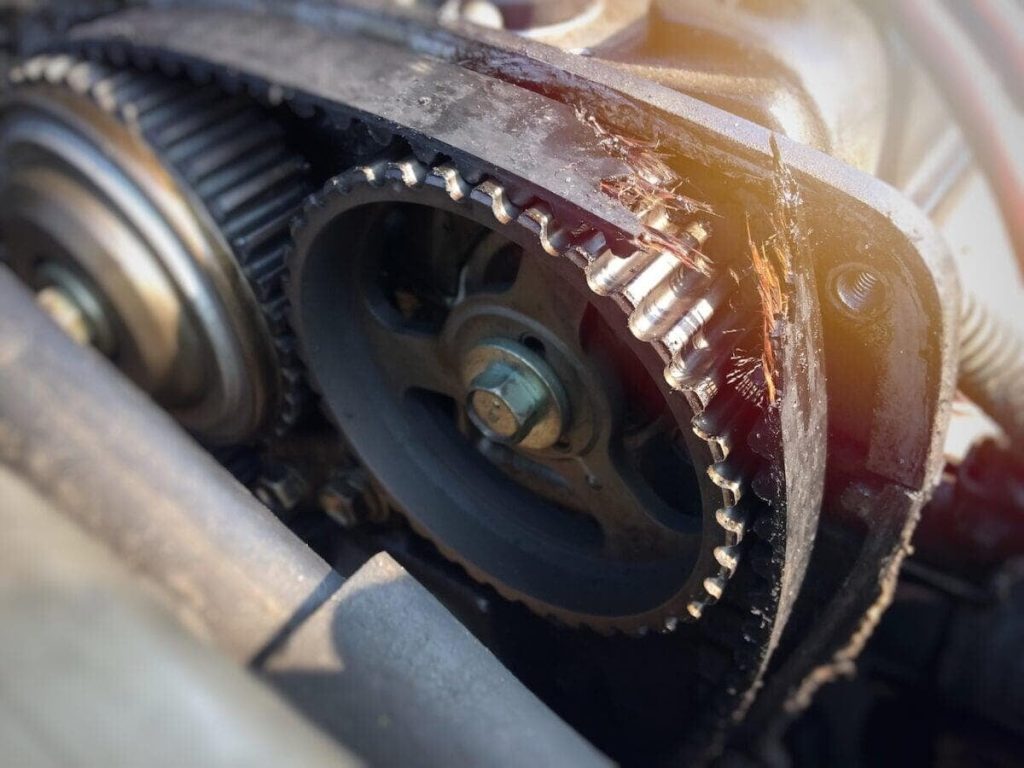
“Timing chain, no maintenance needed”—half true. Chains last longer, but when they fail, repair costs 2x more than belt replacement.
Timing belts require replacement every 60,000-100,000 km (₹8,000-20,000). Sellers often skip this, selling just before the expensive service is due. Timing chains “last the engine life”—except when they don’t, failing at 150,000-200,000 km, destroying valves and pistons (₹80,000-2,00,000 repair). Knowing which your car has, when it was last serviced, and symptoms of wear can save you from catastrophic engine failure.
The trap: Seller knows timing belt due for replacement in 5,000 km, sells before paying ₹15,000. Or timing chain rattling (early failure sign), seller sells before ₹1,50,000 repair needed.
What you’ll learn:
- Belt vs chain (pros, cons, lifespan)
- Replacement intervals (when it must be done)
- Failure symptoms (rattling, misfires, rough idle)
- Inspection methods (visual, sound analysis)
- Why neglecting timing component destroys engines
Section 1: Timing Belt vs Timing Chain
What they do (both):
Synchronize crankshaft (bottom engine) with camshaft (top engine), ensuring valves open/close precisely when pistons move. Incorrect timing = valves hit pistons = catastrophic damage.
Timing Belt:
Material: Reinforced rubber with fiber cords
Pros:
- Quieter operation
- Cheaper to replace (₹8,000-20,000)
- Lighter weight
Cons:
- Must replace every 60,000-100,000 km (or 5-7 years, whichever first)
- Degrades from heat, oil exposure
- Failure = engine destruction
Common in:
- Most Japanese brands (Honda City, Maruti engines, older Toyota)
- European brands (VW, Skoda, Fiat)
Timing Chain:
Material: Metal chain (like bicycle chain)
Pros:
- Longer lifespan (150,000-300,000 km or “lifetime”)
- No scheduled replacement needed (in theory)
Cons:
- Noisier (chain rattle)
- More expensive if it fails (₹60,000-2,00,000)
- Requires oil changes (chain lubricated by engine oil)
- Can fail despite “lifetime” claims (especially if oil changes neglected)
Common in:
- Modern Toyota (Fortuner, Innova Crysta)
- BMW, Mercedes
- Some Honda engines (1.5L VTEC Turbo)
Section 2: Timing Belt Replacement Intervals
Manufacturer recommendations (vary by model):
Maruti (belt engines):
- Interval: 80,000 km or 5 years
- Cost: ₹8,000-12,000 (parts + labor)
Honda:
- Interval: 100,000 km or 7 years
- Cost: ₹12,000-18,000
- Also replace: Water pump (driven by timing belt, add ₹5,000-8,000)
Volkswagen/Skoda:
- Interval: 120,000 km or 8 years
- Cost: ₹15,000-25,000
- Critical: VW engines are “interference” type (valve-to-piston contact if belt fails = ₹2,50,000+ damage)
Hyundai/Kia (belt engines):
- Interval: 90,000 km or 6 years
- Cost: ₹10,000-15,000
Why both mileage AND time matter:
- Rubber degrades with age (even if car not driven)
- Heat cycles, ozone exposure weaken belt
- 7-year-old belt with 40,000 km = still needs replacement (age factor)
Section 3: How to Verify Timing Belt Condition
Service history check (primary method):
Ask seller:
- “When was timing belt last replaced?”
- Red flag: “I don’t know” or “Never replaced” on car with >80,000 km
Request proof:
- Service invoice showing timing belt replacement
- Check invoice date + mileage
- Calculate: Current mileage – invoice mileage = km since replacement
Example:
- Last timing belt replacement: 45,000 km (invoice from 2021)
- Current mileage: 1,15,000 km
- 70,000 km since replacement (approaching next service at 80,000-100,000 km interval)
Visual inspection (limited, requires engine cover removal):
What to check:
- Remove timing belt cover (requires tools, not always accessible)
- Look for:
- Cracks in belt surface
- Fraying at edges
- Oil contamination (belt wet/shiny = oil leak, belt compromised)
- Missing teeth
Limitations:
- Most cars: Belt hidden behind engine cover (not easily visible)
- Requires mechanic’s assistance
Sound test:
Listen for:
- High-pitched squealing from engine front (belt slipping)
- Ticking (belt teeth worn, skipping)
Test:
- Engine at idle (hood open)
- Listen near timing belt area (front of engine, passenger side usually)
- Normal: Smooth engine sound
- Problem: Squealing or ticking = belt wear
Section 4: Timing Belt Failure Symptoms
Early warning signs:
1. Rough idle:
- Engine shakes, RPM fluctuates
- Cause: Belt teeth worn, timing slightly off
2. Misfires:
- Engine hesitates, power loss
- Cause: Valve timing incorrect (belt slipping)
3. Oil leaks:
- Oil on timing belt cover
- Cause: Crankshaft seal leak, contaminates belt (accelerates failure)
4. Check Engine light:
- OBD codes: P0300-P0304 (misfire), P0016 (camshaft position timing)
- Meaning: Timing issue detected
Catastrophic failure (when belt snaps):
Symptoms:
- Engine suddenly stops
- Won’t restart
- No compression (valves bent)
What happened:
- Belt snapped mid-operation
- Camshaft stopped, valves stuck open
- Pistons continued moving, hit open valves
- Result: Bent valves, damaged pistons, possibly cracked head
Repair cost:
- New timing belt: ₹10,000
- Valve replacement (8-16 valves): ₹40,000-80,000
- Piston damage: +₹30,000-60,000
- Labor: ₹20,000-40,000
- Total: ₹1,00,000-1,80,000
Prevention is ₹15,000. Failure is ₹1,50,000.
Section 5: Timing Chain Inspection
Timing chains “last engine lifetime”—with caveats:
What reduces chain life:
1. Neglected oil changes:
- Chain lubricated by engine oil
- Dirty oil = accelerated chain wear
- If oil change skipped: Chain lifespan reduced 30-50%
2. Low oil level:
- Inadequate lubrication
- Chain stretches, tensioner fails
3. High mileage:
- Even well-maintained chains wear out (1,80,000-2,50,000 km)
How to inspect timing chain:
Sound test (most revealing):
Cold start:
- Start engine after sitting overnight
- Listen for first 10-20 seconds
Normal:
- Slight chain rattle for 2-3 seconds (oil pressure building)
- Then smooth
Problem:
- Loud rattling >5 seconds = chain wear, tensioner weak
- Continuous rattle even when warm = chain stretched, replacement needed
Location of sound:
- Front of engine (timing chain cover area)
Rev test:
- Rev engine to 2,500 RPM
- Release throttle suddenly
Normal:
- Smooth deceleration
Problem:
- Rattling during deceleration = chain slapping (loose), tensioner failure
Service history:
Check for:
- Oil change frequency (every 5,000-10,000 km?)
- Oil type (correct grade, e.g., 5W-30 synthetic?)
Red flag:
- Irregular oil changes or cheap mineral oil = chain wear accelerated
OBD codes:
Chain-related codes:
- P0017, P0018: Camshaft position timing over-advanced/retarded
- Meaning: Chain stretched, timing incorrect
- Action: Chain tensioner or chain replacement needed
Section 6: Timing Chain Replacement Costs
When chain replacement needed:
Symptoms indicating failure imminent:
- Loud rattling (cold start)
- Check Engine light (P0017/P0018 codes)
- Rough idle, misfires
Replacement cost:
Parts:
- Timing chain kit (chain + tensioner + guides): ₹20,000-50,000
- Gaskets, seals: ₹5,000-10,000
Labor:
- Engine disassembly (timing cover removal, often requires engine partial removal): ₹25,000-50,000
Total:
- ₹50,000-1,10,000 (depending on car model)
Premium cars (BMW, Mercedes):
- Parts: ₹80,000-1,50,000
- Labor: ₹40,000-80,000
- Total: ₹1,20,000-2,30,000
Why so expensive:
- Chain inside engine (major disassembly required)
- Often requires removing engine from car (especially transverse-mounted engines)
- 8-12 hours labor
Section 7: Negotiation Strategy
If timing belt/chain due for service:
Timing belt scenario:
Car: 2018 Honda City, 95,000 km, asking ₹8,50,000
Timing belt interval: 100,000 km (due in 5,000 km)
Replacement cost: ₹18,000 (belt + water pump)
Negotiation:
- “Timing belt due in 5,000 km, ₹18,000 service needed”
- Demand: ₹20,000 discount (service cost + inconvenience)
Seller may offer:
- “I’ll get it done before delivery”
- Acceptable: If done at authorized dealer, invoice provided
Timing chain scenario:
Car: 2017 Toyota Fortuner, 1,85,000 km, asking ₹22,00,000
Symptoms: Slight cold-start rattle (chain wear)
Replacement cost: ₹80,000-1,20,000
Negotiation:
- “Chain showing wear, replacement likely needed soon”
- Demand: ₹1,00,000-1,50,000 discount (repair cost + risk premium)
Seller may refuse:
- “Chain is fine, just normal sound”
- Counter: Get independent mechanic opinion, OBD scan for timing codes
- If codes present, strengthen negotiation position
Section 8: Real Case – The Skipped Belt Service
2017 Volkswagen Polo, 78,000 km, asking ₹6,50,000
Buyer’s question: “When was timing belt last replaced?”
Seller’s answer: “Not sure, I’ll check service records”
Red flag: Vague answer on critical maintenance
Service records check:
- Last major service: 45,000 km (timing belt NOT replaced)
- Current: 78,000 km
- VW timing belt interval: 60,000 km
Calculation:
- 18,000 km overdue for timing belt replacement
- Belt is 78,000 km old (never replaced)
Risk:
- VW engines = interference type
- Belt failure = ₹2,50,000+ engine damage
Buyer’s response:
- “Timing belt 18,000 km overdue, needs immediate replacement”
- Replacement cost: ₹22,000 (VW dealer quote)
Negotiation:
- Demanded ₹30,000 discount (service cost + risk of overdue belt)
Seller’s reaction:
- “I didn’t know, I’ll get it replaced before sale”
Problem:
- Getting it replaced AFTER overdue = risk already taken
- Belt may fail any moment
Buyer’s counter-offer:
- ₹6,20,000 (₹30K off) OR seller replaces belt at authorized dealer before delivery
Seller chose: Replace belt before delivery
Outcome:
- Seller paid ₹22,000 for belt replacement
- Buyer got car with fresh timing belt, peace of mind
- Lesson: Asking one question saved ₹22,000 + risk of catastrophic failure
Conclusion: Timing Components are Non-Negotiable
Belt or chain, timing components failing = engine destruction. Know the interval, verify the history, negotiate the cost.
Your verification protocol:
Pre-purchase (from seller):
- Ask: “Timing belt or chain?”
- Ask: “When was timing belt last replaced?” (if belt)
- Request: Service invoice showing replacement
Service history analysis:
- Calculate km/years since last replacement
- Compare to manufacturer interval
Physical inspection:
- Cold-start sound test (chain rattle?)
- Check Engine light check
OBD scan:
- Check for timing-related codes (P0016-P0018, P0300-P0304)
Decision framework:
Timing belt:
- <20,000 km since replacement: Proceed
- Due in 10,000-20,000 km: Negotiate ₹10,000-15,000 discount
- Due in <10,000 km: Demand seller replaces before sale OR ₹20,000 discount
- Overdue: Walk away or demand ₹30,000-50,000 discount (service cost + risk)
Timing chain:
- No rattle, good service history: Proceed
- Slight cold-start rattle: Negotiate ₹20,000-30,000 discount
- Loud continuous rattle: Demand ₹80,000-1,20,000 discount OR walk away
- Timing codes present: Walk away (failure imminent)
Don’t inherit someone else’s deferred maintenance. The timing belt doesn’t care if you didn’t know.
Key Takeaways
✓ Timing belt must replace every 60-100K km OR 5-7 years (whichever first)
✓ Timing chain “lifetime” = 150-250K km with perfect oil changes (not truly lifetime)
✓ Belt failure in interference engine = ₹1-2L repair (bent valves, damaged pistons)
✓ Cold-start chain rattle >5 seconds = chain wear (₹50K-1.1L replacement needed)
✓ VW/Skoda belts = interference engines (failure catastrophic, 60K km interval critical)
✓ Oil change neglect kills timing chains (every 5-7.5K km mandatory)
✓ Overdue belt = walk away or deep discount (failure imminent, risk too high)
Checklist References
- service_history#4: Timing belt replacement records
- engine#30: Timing belt/chain condition
- engine#8: Engine sound analysis (cold start rattle)
- obd_scan#4: Timing-related fault codes (P0016-P0018)
Next Steps
Check service history for timing belt replacement → Service records reveal maintenance history
Professional timing component inspection → Sound analysis, OBD scan, visual inspection
Timing belt failure doesn’t give warnings. It gives engine destruction. Check before you buy.