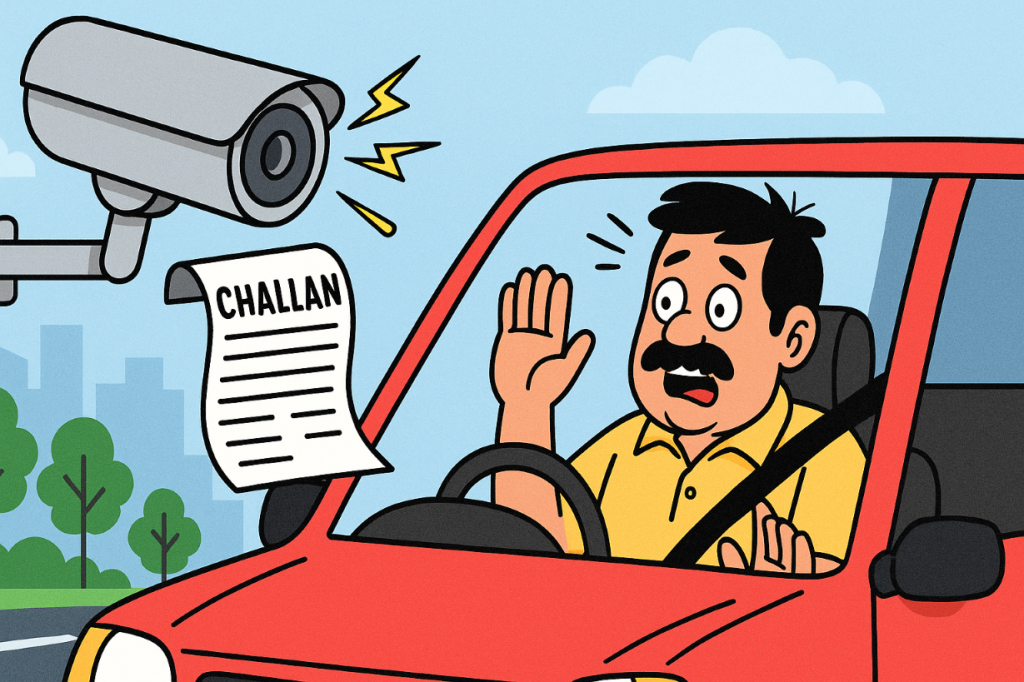
“Clean car, no issues”—until you discover ₹18,000 in unpaid traffic fines blocking your RC transfer, insurance renewal, and resale.
Unpaid challans (traffic fines) accumulate silently. Seller speeds, jumps signals, parks illegally—fines pile up. When you try to transfer ownership, RTO blocks the process until ALL fines are cleared. Negotiating who pays after purchase is difficult. Prevention: Check before buying.
How to Check Challan Status
Online (free, 2 minutes):
1. Parivahan website:
- Visit: parivahan.gov.in
- Go to: “Check Challan Status”
- Enter: Registration number
- Shows: All pending fines (date, amount, violation)
2. State RTO portals:
- Most states have own portals (Vahan, e-Challan)
- Search: “{state} traffic challan check”
3. CarQ vehicle history:
- Includes challan status in report
Common Violations and Fines
Speeding: ₹1,000-2,000
No seatbelt: ₹1,000
Signal jump: ₹1,000-5,000
Wrong parking: ₹500-1,000
Overloading: ₹2,000-5,000
No insurance: ₹2,000 + vehicle impoundment
Drunk driving: ₹10,000 + license suspension
Fines accumulate quickly: One year of violations = ₹10,000-30,000
Impact on Ownership Transfer
RTO transfer process:
- Apply for ownership transfer
- RTO checks: Pending challans
- If challans exist: Transfer blocked until cleared
Who pays?
- Legally: Person in whose name RC is registered (seller)
- Practically: Becomes negotiation point
- Best practice: Clear before purchase
Impact on Insurance
Insurance renewal:
- Some insurers check challan status
- Multiple violations: May increase premium or refuse coverage
Impact on Resale
When you sell later:
- Buyers will check challan history
- Red flag: Multiple violations = reckless driver = higher wear/accident risk
- Value impact: May reduce resale value 2-5%
Negotiation Strategy
If challans found:
Small amount (<₹5,000):
- Request seller clear before sale
- Or: Deduct from sale price
Large amount (>₹10,000):
- Demand seller clear before sale (don’t trust “I’ll pay later”)
- Or: Walk away (indicates reckless ownership)
Legal clarity:
- Include challan clearance in sale agreement
- “Seller confirms all traffic fines cleared as of {date}”
Real Case
2020 Hyundai i20, ₹8,50,000
Challan check revealed:
- 12 pending fines
- Total: ₹16,500
- Violations: Speeding (8), signal jump (3), wrong parking (1)
Red flags:
- Multiple speeding violations = aggressive driver
- Likely higher wear on brakes, suspension, engine
Buyer’s response:
- Demanded seller clear all fines before sale
- Also: Demanded ₹10,000 additional discount (reckless driving risk premium)
Seller refused: “Fines are minor, I’ll pay after sale”
Buyer walked away: Trust issue + reckless driving pattern
Lesson: Challan history reveals driver behavior
Multiple Ownership and Challans
If previous owner’s challans not cleared:
- May still appear in system
- Verify: Fine date vs ownership transfer date
- If fine from previous owner’s period: Not your responsibility (but may still block transfer)
Resolution: Contact RTO with proof of ownership timeline
Conclusion
Challans are debt attached to the vehicle. Clear before buying.
Protocol:
- Check online (Parivahan, state RTO portal)
- If challans found: Demand clearance before purchase
- Include in sale agreement
Decision:
- No challans: Proceed
- <₹5,000: Negotiate clearance or discount
- ₹10,000: Demand clearance OR walk away
- Multiple violations: Consider driver behavior impact
Key Takeaways
✓ Check challans online (Parivahan.gov.in, free, takes 2 minutes)
✓ RC transfer blocked until fines cleared (RTO won’t process with pending challans)
✓ Multiple violations = reckless driver (higher wear risk, negotiate accordingly)
✓ Demand clearance before purchase (don’t trust “I’ll pay later”)
✓ Include in sale agreement (“All fines cleared as of {date}”)
Check complete vehicle history including challans
Challans don’t disappear. They transfer with the car. Check before you own them.