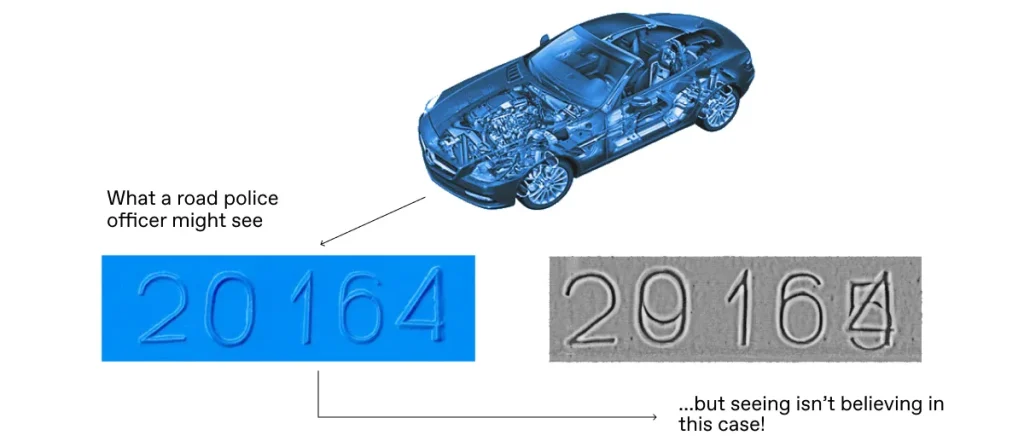
Thieves spend ₹15,000-25,000 to alter VINs on stolen cars worth ₹8-12 lakhs. Learn the physical evidence they can’t hide.
A professional VIN alteration looks perfect to untrained eyes—factory-quality plates, clean stamping, matching documents. But physics doesn’t lie. Grinding metal leaves microscopic marks. Re-stamping changes depth. Fresh paint over old rust tells a story. The ₹9 lakh Creta that “passed” visual inspection? A CarQ professional check found UV-invisible grinding marks and welding near chassis VIN—two stolen vehicles merged together.
Understanding VIN Tampering Methods
Method 1: Plate Replacement (Most Common)
- Remove original windshield/door jamb VIN plates
- Replace with plates from scrapped vehicles
- Use factory-looking rivets
Cost to fraudster: ₹5,000-8,000 | Detection: Moderate
Method 2: Re-stamping (Advanced)
- Grind off original chassis VIN
- Re-stamp new number
- Apply paint/undercoating to hide evidence
Cost to fraudster: ₹12,000-18,000 | Detection: High (requires professional tools)
Method 3: Document Cloning (Sophisticated)
- Keep original VINs intact
- Create duplicate RC/insurance with same VIN
- Sell “same” car to multiple buyers
Cost to fraudster: ₹8,000-15,000 | Detection: Easy (online database check)
In simple terms: Think of VIN tampering like passport forgery. Cheap fakes are obvious, but professional jobs require expert examination and database cross-checking.
Physical Signs of VIN Tampering
Windshield VIN Plate Inspection
Normal Factory Plate:
- Plate sits flush with dashboard
- Rivets aged, slightly corroded (matches car age)
- Characters stamped uniformly (same depth)
- No scratches around plate
Red Flags:
1. Rivet Condition
- ❌ Shiny, new rivets on old car
- ❌ Different rivet style (Phillips screws vs pop rivets)
- ❌ Rivet heads painted over
- ❌ Uneven rivet placement
2. Plate Alignment
- ❌ Plate not flush (gaps around edges)
- ❌ Crooked installation
- ❌ Plate rattles when windshield tapped
- ❌ Adhesive visible around edges
3. Surrounding Area
- ❌ Fresh scratches on dashboard
- ❌ Pry marks on dashboard
- ❌ Clean area around plate on dusty dash
- ❌ Dashboard cracks near plate
4. Stamping Quality
- ❌ Characters different sizes or fonts
- ❌ Stamping depth varies
- ❌ Characters misaligned
- ❌ Font doesn’t match manufacturer standard
In simple terms: Factory installations are perfect—symmetrical, aged consistently, undisturbed. Replacements always leave evidence.
Door Jamb Sticker Analysis
Normal: Sealed edges, crisp print, hologram present, aged with vehicle.
Red Flags:
- ❌ Peeling corners, air bubbles, too new compared to surroundings, multiple layered stickers
- ❌ Blurry text, inconsistent font, missing hologram, incomplete info
- ❌ Manufacturing date mismatch, wrong paint code, incorrect tire specs
Example: 2017 City with brand-new door sticker but door jamb showed 7 years weathering. Replaced after accident, VIN cloned.
Chassis VIN Stamping Inspection
Normal: Uniform depth, aligned characters, smooth metal, aged like surrounding chassis, no paint overspray.
Red Flags:
- ❌ Variable depth, misaligned characters, too fresh on old chassis
- ❌ Grinding marks, smoother metal than surroundings, welding near VIN
- ❌ Fresh paint only around VIN, paint overspray on characters
In simple terms: Re-stamping requires grinding (smooth patch on textured metal) and hammering (uneven depth). Fresh stamping on old metal stands out like new ink on yellowed paper.
Clone Car Detection: The Duplicate VIN Scam
How Clone Car Fraud Works
The Scam:
- Fraudster finds legitimately registered car (2019 Honda City, VIN:
ABCD1234) - Steals/buys wrecked car of same model
- Creates duplicate RC/insurance with VIN
ABCD1234 - Sells wrecked car with “clean” cloned documents
Result: Two cars exist with identical VIN—one legitimate, one clone.
Buyer’s Nightmare:
- Buys car with “valid” RC
- Tries to re-register → RTO flags “VIN already registered”
- Insurance claim rejected → “Policy already active elsewhere”
- Police investigation → Vehicle seized, buyer loses everything
In simple terms: Like photocopying your Aadhaar and using it to open a bank account. Documents look real, but system reveals duplicate when cross-checked.
How to Detect Clone Cars
Database Check: CarQ history (₹1,500-2,500) reveals VIN registered in multiple states, duplicate insurance policies, theft reports. Detection: 95%+
Physical Verification: RC says “Red City,” actual car is “White City” = clone (VIN stolen from red car).
Service History: Legitimate vehicles have consistent records. Clones show no dealer service history for that VIN.
Etching vs Sticker: Reliability Ranking
Most to Least Tamper-Proof:
- Underbody (95%) – Lift required, evidence visible
- Engine Bay (85%) – Direct stamping, UV reveals tampering
- Door Sticker (60%) – Replaceable but hard to fake well
- Windshield (40%) – Easiest to alter
In simple terms: Harder to access = harder to alter. Prioritize underbody verification.
Professional Detection Techniques
CarQ Inspections Include:
UV Light: Reveals grinding/welding invisible to naked eye
Paint Thickness: Factory 90-120 microns, repainted 180-300+ (hides alterations)
Digital Matching: AI compares font, depth, spacing across all VINs
Database Check: 15+ databases (RTO, insurance, theft, multi-state)
Cost: ₹2,999 | Detection: 98%+ for VIN fraud
Legal Implications
If You Buy Tampered VIN Vehicle (Even Unknowingly):
Consequences:
- Vehicle seized (no compensation)
- Criminal investigation (burden of proof on you)
- Original owner can reclaim
- Insurance void, cannot sell/register
- Banks won’t loan
Real Case: Buyer unknowingly purchased tampered VIN car. Police seized it. Court: return to rightful owner. Loss: ₹6.8 lakhs + ₹1.2 lakhs legal fees = ₹8 lakhs
The 15-Minute Tampering Check
Windshield (3 min): Check rivet condition, scratches, flush fit
Door Jamb (3 min): Check edges, print quality, sticker age
Engine Bay (4 min): Locate VIN, clean if dusty, check stamping depth, look for grinding
Online Verification (5 min): Run VIN through CarQ for duplicate/theft flags
Decision:
- ✅ All checks pass → Professional inspection
- ❌ Any red flag → Walk away
Key Takeaways
✓ Physical tampering leaves evidence: Grinding, welding, fresh stamping, paint differences ✓ Clone cars = database mismatch: ₹1,500 report reveals duplicates ✓ Underbody VIN is king: 95% reliable—can’t alter without evidence ✓ Door sticker quality matters: Too new on old car = replacement ✓ Professional tools essential: UV light detects 98% of tampering ✓ Legal liability is yours: Innocent buyers still lose car + money ✓ Verification cost: ₹3,000-5,000 prevents ₹5-12 lakh loss
Pingback: VIN Verification: Your First Line of Defense Against Used Car Fraud – CarQ – Smarter Used Car Decisions