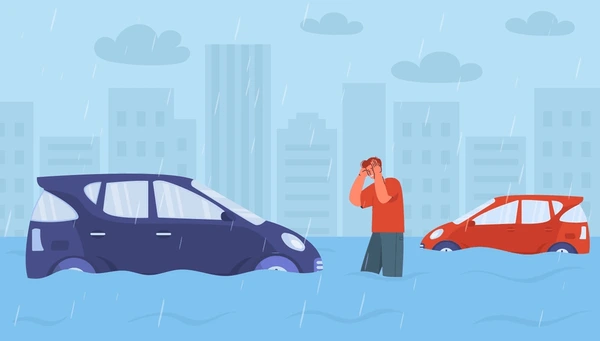
It looks perfect. Drives fine. Smells… slightly musty? Six months later: ₹1.85 lakhs in electrical repairs, corroded frame, worthless resale. Welcome to the flood car nightmare.
Every monsoon season in India, thousands of vehicles are submerged in water—from minor ankle-deep flooding to complete submersion. Insurance companies declare many as total loss (when repair costs exceed 75% of the car’s current market value) and pay out owners. These cars should be scrapped. Instead, they’re cleaned up, dried out, detailed to perfection, and resold to unsuspecting buyers at near-market prices.
In simple terms: Flood damage is like water damage to your smartphone—it might work for weeks, then suddenly dies. Car electronics behave the same way: delayed failure after water exposure. Within months, electrical problems emerge. Within a year, corrosion spreads. Within two years, the car is essentially worthless.
Why Flood Cars Are Dangerous
Modern cars contain 30-50 ECUs (Electronic Control Units) – computerized modules controlling everything from engine timing to airbags. Water corrodes circuit boards, creates short circuits, and damages sensors throughout.
Timeline of failure:
- Month 1-3: Minor glitches (intermittent warning lights)
- Month 3-6: Major failures (ECU failures, ₹40,000-80,000 each)
- Month 6-12: Multiple system failures (₹1-2 lakh repairs)
- Year 2+: Essentially unrepairable (frame corrosion, worthless)
Real cost: Buyer purchases 2019 Creta for ₹10.5 lakhs. Six months later: ₹1.85 lakhs in electrical repairs, current value ₹4-5 lakhs. Total loss: ₹6.5+ lakhs.
Resale value: ZERO. Once discovered, informed buyers walk away immediately.
What You Need to Check
1. Water Ingress Evidence
The most reliable way to detect flood damage is identifying where water entered and stayed.
Critical checks:
- Musty smell test (persistent damp odor)
- Water lines (horizontal discoloration on panels)
- Mud deposits (silt in hidden areas like vents)
- Carpet condition (padding disintegrated, moisture)
- Rust in unusual locations (seat rails, under dashboard)
Complete Water Ingress Detection Guide →
2. Electrical System Damage
Water damage to electronics is the most expensive and dangerous aspect of flood cars.
What to verify:
- Corroded electrical connectors (green/white oxidation)
- Failed ECU modules (multiple warning lights)
- Wiring harness corrosion (intermittent electrical issues)
- Multiple non-functional features (3+ systems dead)
- Airbag system integrity (hidden deployment)
Complete Electrical Damage Guide →
3. Insurance Claim History
Insurance records reveal flood damage even when sellers deny it.
Red flags:
- Claim description: “Water ingress,” “flood damage,” “act of God”
- Claim timing: July-September (monsoon season)
- Total loss status then mysteriously back on road
CarQ vehicle history report tracks claims across states and reveals total loss status that sellers hide through cross-state re-registration fraud.
Monsoon Buying Precautions
High-risk periods: August-October (after flooding), November-December (cleaned-up cars hitting market), January-March (sellers offloading before issues emerge).
Flood-prone areas: Mumbai, Chennai, Kolkata. Cross-state purchase right after monsoon = highly suspicious.
The smell test (non-negotiable): Seal car overnight (windows up 12+ hours), smell immediately upon opening. Musty odor = walk away. If seller refuses overnight test = walk away.
Cost of ignoring musty smell: ₹8-12 lakh total loss. Detection time: 30 seconds.
Your Action Plan
Never buy without this three-layer verification:
- DIY smell and visual checks (free, 30 minutes)
- Musty smell test
- Check carpet edges for water lines
- Inspect dashboard vents for mud
- Look for rust on seat rails
- CarQ vehicle history report (₹1,500-2,500)
- Insurance claim history (flood/water damage markers)
- Total loss status across states
- Service record gaps during monsoon
- Professional inspection (₹3,000-5,000)
- Carpet removal and floor pan inspection
- ECU fault code history (shows water damage codes)
- Underbody lift inspection (exhaust mud, differential water)
- Electrical connector examination
Total cost: ₹5,000-8,000 What it prevents: ₹8-12 lakh total loss ROI: 10,000-15,000% return on verification investment
Deep Dive Resources
For comprehensive flood damage detection, explore these detailed guides:
Water Ingress Evidence →
Master the musty smell test, water line detection, mud deposit identification, carpet inspection techniques, and rust pattern analysis that reveals submersion.
Electrical Flood Damage →
Learn to identify corroded connectors, diagnose failed ECU modules, detect wiring harness corrosion, and understand the progressive timeline of electrical failures.
Key Takeaways
✓ Musty smell = walk away immediately – No exceptions, no negotiations, no rationalizing
✓ Flood damage is progressive – Gets worse over time, repairs don’t fix underlying corrosion
✓ Check carpet edges for water lines – Horizontal discoloration indicates submersion level
✓ Verify insurance history for “water ingress” claims – Total loss flood cars often resold illegally
✓ Zero resale value for flood cars – You’ll be stuck with it or forced to sell at scrap value
✓ Professional inspection mandatory – Carpet removal and electrical diagnostics can’t be DIY
Ready to verify a car’s flood damage status? Start with quick vehicle search to check basic history, then get comprehensive vehicle history report for insurance claims (including flood/water damage markers). For complete certainty, schedule professional used car inspection with carpet removal and underbody analysis.