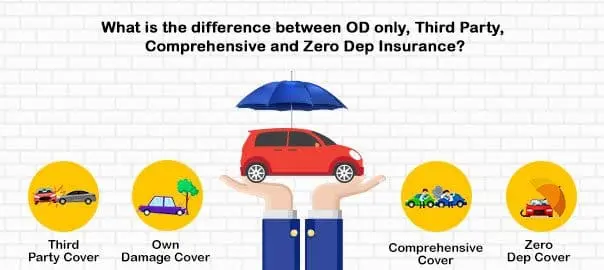
A ₹45,000 OD claim reveals minor damage. A ₹45,000 TP claim with no OD? The owner hid a major accident.
The OD vs TP Confusion That Costs Buyers Lakhs
A 2020 Maruti Swift shows one ₹52,000 claim. The seller says “minor damage.” But it’s a TP (Third Party) claim – insurance paid for the OTHER car’s damage. The Swift’s actual damage? ₹1.2 lakh paid in cash to hide it.
In simple terms: Understanding OD vs TP vs Total Loss reveals what sellers hide. Claim type matters more than amount.
OD Claims: Own Damage Explained
OD (Own Damage) claims are when YOUR car gets damaged and insurance pays to fix YOUR vehicle.
In simple terms: OD = insurance fixes your car. Claim amount shows damage severity.
OD Claim Severity Table
| Claim Amount | Severity | What It Means | Example Damage |
|---|---|---|---|
| ₹5,000-20,000 | Minor | Cosmetic, no structural impact | Bumper scratch, headlight crack, door dent |
| ₹20,000-50,000 | Moderate | Single panel replacement | Complete door replacement, bonnet repaint |
| ₹50,000-1,00,000 | Significant | Multiple panels or airbag | 2-3 panels, airbag deployment, fender |
| ₹1,00,000+ | Severe | Frame/chassis damage – walk away | Structural damage, multiple airbags, pillar damage |
Real Example: Maruti Baleno OD Claim
2019 Baleno Delta (CVT) | Claim: ₹87,000 | Date: March 2022
Damage: Front bumper ₹12k, Radiator ₹18k, Headlights ₹22k, Bonnet ₹15k, AC condenser ₹14k, Labor ₹6k
Analysis: Front-end collision, NO airbag deployment. Only bolt-on parts – no frame damage.
Value loss: ₹40,000-50,000 | Verdict: Acceptable with 8-10% discount
TP Claims: The Hidden Repair Pattern
TP (Third Party) claims are when you hit someone else. Insurance pays for THEIR damage, not yours.
In simple terms: TP claims hide YOUR car’s damage. Owners pay cash repairs to avoid premium hikes and maintain NCB (No Claim Bonus – insurance discount for zero claims).
Red flag pattern:
- Large TP claim (₹60,000+) + NO OD claim = Hidden cash repairs
Real Example: Honda City Hidden Repairs
2018 City VX | TP Claim: ₹95,000 | OD Claim: ₹0 | Date: July 2021
CarQ vehicle history revealed the TP claim. Physical inspection exposed:
- Fender: Repainted (180 microns vs factory 120 – paint meter proof)
- Bumper: Aftermarket clips (not Honda OEM)
- Headlight: Non-original (serial doesn’t match VIN)
- Hood gap: 8mm vs 4mm (factory: ±2mm)
Actual repair cost: ₹1.4-1.6 lakh in cash Owner saved by hiding: ₹80,000+ (NCB loss + premium hikes + value drop) Buyer’s overpayment risk: ₹1.2-1.5 lakh
In simple terms: Large TP + no OD = hidden damage. Get paint meter inspection.
Total Loss Claims: The Rebuilt Write-Off Danger
Total Loss happens when repair cost exceeds 75% of IDV (Insured Declared Value – your car’s market price). Insurance pays the owner, takes the wreck, marks RC as “Total Loss.”
The fraud: Mechanics buy wrecks for ₹1-1.5 lakh, repair with cheap parts, forge documents, resell as “excellent” for ₹4-4.5 lakh.
In simple terms: Total loss = write-off. Structurally unsafe. Walk away.
Real Example: Hyundai Verna Total Loss Case
2017 Verna SX (diesel, auto) | IDV: ₹6,80,000 | Date: August 2020
August 2020: Accident
- Truck side-collision at 60 km/h
- 4 airbags deployed, B-pillar crushed
- Hyundai repair quote: ₹5,40,000 (79% of ₹6.8 lakh IDV)
- Insurance declares Total Loss, pays ₹6,80,000
September 2020: Fraud
- Mechanic buys wreck: ₹1,20,000
- Cheap repairs: ₹2,80,000 (used airbags ₹30k, straightened B-pillar ₹25k)
- RTO bribe: ₹40,000 (removes Total Loss status)
November 2020: Resale
- Listed as “excellent condition”: ₹5,80,000
- Buyer pays: ₹5,60,000
- Mechanic’s profit: ₹1,00,000
6 Months Later:
- Airbags failed (fake modules)
- B-pillar cracked (not replaced, just straightened)
- Insurance refused renewal (Total Loss in database)
- Car value: ₹0
Buyer’s loss: ₹5,60,000
CarQ prevention: Vehicle history checks VAHAN + insurance databases for Total Loss status.
Claim Frequency: The Reckless Driver Pattern
Claim frequency reveals driving habits.
Pattern analysis:
- 0-1 claim in 5 years: Careful driver
- 2 claims in 5 years: Acceptable
- 3+ claims in 3 years: Red flag
Real Example: Tata Nexon with 4 Claims
Vehicle: 2019 Tata Nexon XZ+ | Period: 3 years | Claims: 4
- Mar 2020: ₹18,000 (rear bumper)
- Sep 2020: ₹34,000 (side door)
- Apr 2021: ₹12,000 (headlight)
- Jan 2022: ₹67,000 (front collision)
Total: ₹1,31,000 | Frequency: Accident every 9 months (vs industry 3-4 years)
Impact:
- Value loss: ₹80,000-1,00,000
- Next owner premium: +25-40%
- Some insurers refuse coverage
In simple terms: Frequent claims = reckless driver or accident-prone car. You pay through higher premiums.
Key Takeaways
✓ OD claims show your car’s damage – Amount directly reflects severity of repairs ✓ TP claims hide your car’s damage – Large TP with no OD means cash repairs to hide severity ✓ Total Loss = immediate walk away – Structurally unsafe, uninsurable, zero resale value ✓ Claim frequency matters – 3+ claims in 3 years suggests reckless driver ✓ Get a CarQ history report – Only way to see ALL claims across all insurers nationwide ✓ ₹1.2+ lakh in claims = negotiate hard – Demand 15-20% price reduction minimum
Pingback: Insurance Claim History: The Hidden Deal-Breaker in Used Cars – CarQ – Smarter Used Car Decisions