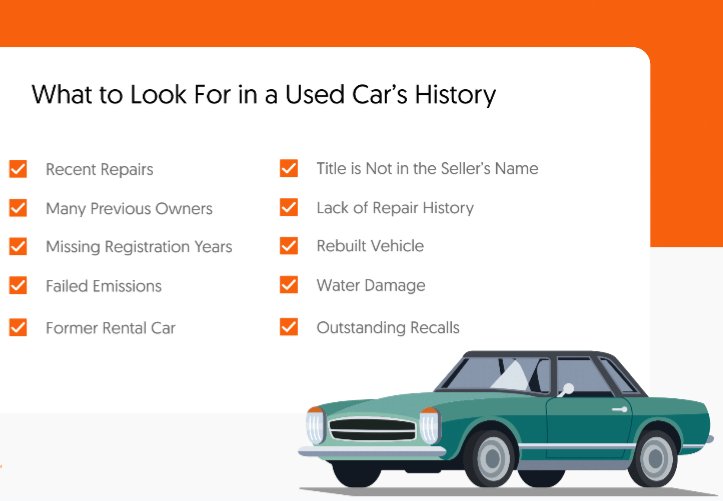
Services bunched together before sale. Different workshop each visit. Premature clutch replacement at 60,000 km. These patterns reveal the truth sellers try to hide.
Service history isn’t just a record of maintenance—it’s a forensic timeline revealing abuse, neglect, commercial use, and fraud. Sellers know buyers check service books, so they’ve evolved sophisticated tactics: forging stamps, timing pre-sale services to hide gaps, and workshop-hopping to conceal chronic problems.
What you’ll learn:
- Missing records and gap patterns
- Forged documentation indicators
- Workshop hopping analysis (hiding problems)
- Premature major repairs (abuse indicators)
- Pre-sale preparation bunching
- Chronic problem patterns
- Commercial use service indicators
Missing Records and Gap Patterns
Service Gap Timeline Analysis
6-Month Gap:
- Scenario: Services at 10K, 20K, then 12-month gap, then 35K
- Likely cause: Financial hardship, low usage, or minor neglect
- Risk level: Low to moderate
- Action: Ask for explanation, inspect for neglect indicators
12-Month Gap:
- Scenario: Regular services, then 1-year gap, then resumed
- Possible causes:
- Car stored (owner abroad, relocated)
- Commercial use (no official service during taxi period)
- Accident repair (car in body shop for months)
- Risk level: Moderate to high
- Action: Demand explanation with proof (travel documents, insurance claim)
24+ Month Gap:
- Scenario: Services stop completely for 2+ years
- Likely causes:
- Severe neglect (owner didn’t care)
- Major accident (car written off, then rebuilt)
- Flood damage (car submerged, cleaned up)
- Commercial conversion (taxi use, no records)
- Risk level: Very high
- Action: Walk away or demand 30-40% discount + deep mechanical inspection
In simple terms: Service gaps are like missing chapters in a book. A gap during 2020 monsoon season might hide flood damage. A gap followed by sudden engine rebuild? Likely neglect caused failure.
Forged Documentation Indicators
Fake Service Book Stamps
Visual red flags:
Stamp quality inconsistency:
- Genuine: Uniform ink density, slight paper indentation
- Fake: Blurry edges, inconsistent pressure, no indentation
- Test: Run finger over stamp—genuine leaves slight texture
Date/mileage anomalies:
- Services stamped every month but only 2,000 km accumulated (commercial use, odometer tampered)
- Mileage progresses: 10K, 20K, 15K, 30K (backward jump = forgery)
- All stamps identical intensity (real stamps fade over time as ink pad dries)
Dealer information errors:
- Stamp shows dealer address, but dealer closed/relocated years ago
- Dealer name misspelled
- Service advisor signature illegible or varies wildly
Altered Documents
Common alteration techniques:
Whiteout/correction fluid:
- Original date erased, new date written
- Check: Hold page to light—whiteout visible
- UV light reveals alterations
Photocopied pages:
- Inserted fake service records
- Check: Paper quality differs, binding fresh
- Sequential page numbers skip
Invoice manipulation:
- Scanned invoice, digitally altered date/mileage, reprinted
- Check: Printer quality vs letterhead quality mismatch
- GST number verification online (fake invoices use invalid GST)
Workshop Hopping Patterns
Why Sellers Workshop-Hop
Legitimate reasons:
- Relocated to new city
- Dissatisfied with service quality
- Dealer closed/relocated
- Warranty expired, switched to cheaper local garage
Fraudulent reasons:
- Hiding chronic problems: Dealer A discovers transmission issue, owner goes to Dealer B to avoid “problematic car” label
- Avoiding warranty claim denial: Repeated failures trigger dealer scrutiny
- Commercial use: Taxi owners use different garages to avoid high-mileage tracking
- Forged records: Real dealer won’t authenticate fake stamps, so “switch” dealers in records
How to Analyze Workshop Patterns
Red flag pattern 1: Monthly workshop changes
- Jan: Dealer A
- Feb: Dealer B
- Mar: Local garage C
- Apr: Dealer D
- Indicates: Owner seeking cheapest option (quality inconsistency) OR hiding problems
Red flag pattern 2: Authorized to local shift
- First 3 services: Authorized dealer
- Sudden shift: Local workshop only
- Check: Did warranty expire? If no, why abandon authorized service?
- Possible cause: Major problem discovered, owner avoiding expensive dealer repair
Red flag pattern 3: Multiple cities
- Services in Delhi, Bangalore, Mumbai, Pune
- Could indicate:
- Commercial use (taxi traveling interstate)
- Relocated multiple times (suspicious if short timeframes)
- Forged records (using different cities to avoid verification)
In simple terms: Loyalty to one service center suggests consistent care. Jumping between 5 different workshops in 2 years suggests hiding problems or unreliable service quality.
Premature Major Repairs
Normal vs Premature Component Failure
Timing belt/chain:
- Normal replacement: 80,000-100,000 km or 8-10 years
- Premature: Replaced at 50,000 km
- Indicates: Neglect (missed oil changes → chain stretch) or severe overheating
Clutch assembly:
- Normal replacement: 60,000-120,000 km (city vs highway use)
- Premature: Replaced at 30,000-40,000 km
- Indicates: Abuse (riding clutch, aggressive driving) or driver learning manual transmission
Transmission rebuild:
- Normal: Should last 200,000+ km with proper service
- Premature: Any transmission work before 80,000 km
- Indicates: Severe neglect (never changed ATF/CVT fluid) or abuse
Engine overhaul:
- Normal: Should last 250,000+ km
- Premature: Before 100,000 km
- Indicates: Severe overheating, oil starvation, or chronic neglect
Turbocharger replacement:
- Normal: 80,000-150,000 km (diesels)
- Premature: Before 60,000 km
- Indicates: Oil contamination, neglected oil changes, or boost pressure abuse
In simple terms: Cars are designed to last with proper maintenance. If major components failed early, either the car was abused or severely neglected. Both scenarios mean expensive problems ahead.
Pre-Sale Preparation Bunching
The “Catch-Up Service” Red Flag
Pattern:
- 2-year service gap (no records from 40K to 90K)
- Then 3 services in 3 months:
- Month 1: Oil change
- Month 2: Brake pads, filters
- Month 3: Transmission service, detailing
What this reveals:
- Owner neglected car for 2 years
- Realized no buyer will accept gaps
- Rushed “catch-up” services before selling
- Problem: Damage from 2-year neglect already done
Example:
- Oil not changed for 2 years → engine sludge formed
- Pre-sale oil change doesn’t remove sludge
- Buyer gets car → engine failure at 95,000 km → ₹60,000 repair
In simple terms: Bunched services are like cramming before an exam. It shows you didn’t study all year, and cramming won’t fix the gaps in knowledge.
Only Major Services, Skipped Minor Ones
Pattern:
- Services at 10K, 30K, 50K (major paid services)
- Missing: 20K, 40K (minor services)
Indicates:
- Owner only did mandatory paid services
- Skipped free/cheap intermediate checks
- Risk: Brake pads, fluid top-ups, filter changes neglected
Chronic Problem Patterns
Same Problem Appearing Repeatedly
Pattern in invoices:
- Service 1: Replace brake pads
- Service 2 (15,000 km later): Replace brake pads again
- Service 3 (12,000 km later): Replace brake pads AGAIN
Normal brake pad life: 30,000-40,000 km
Indicates:
- Aggressive braking (driver rides brakes)
- Commercial use (taxi/delivery—constant stop-and-go)
- Caliper issue (pads wearing unevenly, root cause not fixed)
- Wrong parts (cheap aftermarket pads wearing fast)
Repeated Electrical Repairs
Pattern:
- Multiple battery replacements (every year)
- Alternator replaced twice
- Wiring harness repairs
- ECU issues
Likely cause: Flood damage—water damaged electrical system, chronic issues forever
Key Takeaways
✓ Service gaps of 2+ years = walk away (compound neglect, hidden damage, or commercial use)
✓ Bunched pre-sale services reveal prior neglect (catch-up services don’t fix existing damage)
✓ Workshop hopping hides chronic problems (loyalty to one dealer = consistent care)
✓ Premature major repairs indicate abuse/neglect (clutch at 30K, transmission at 40K = red flags)
✓ Same problem repeatedly = root cause not fixed (or commercial use wear patterns)
✓ Service every 3-4 months = commercial use (taxi/fleet—50K+ km/year)
✓ Forged stamps are common (verify stamps with dealer directly)
Next Steps
Get CarQ vehicle history report → AI analyzes service patterns, detects anomalies, predicts failures
Call dealerships with chassis number → Verify service stamps authenticity, cross-check workshop hopping claims
Service patterns reveal what sellers hide. Gaps, bunching, and workshop-hopping are forensic evidence of problems.
Pingback: Don’t Skip the Service History – Especially for Used Cars – CarQ – Smarter Used Car Decisions