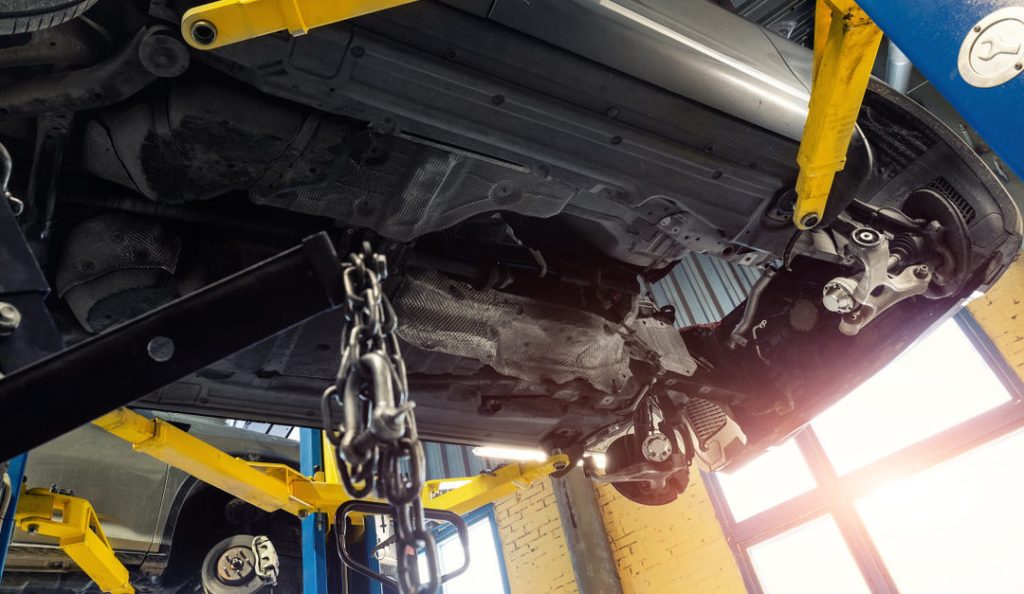
₹3.5 lakhs of structural damage hidden beneath fresh undercoating. The car looks perfect on top—but underneath, welding marks, paint overspray, and buckled metal tell the real story.
Frame damage is the most serious accident damage type, hidden where buyers never look: underneath the car. Sellers detail the exterior until it gleams, betting you won’t inspect the chassis (metal frame), frame rails (main beams running front to back), floor pan (metal floor), or pillars (vertical supports—A-pillar by windshield, B-pillar by doors, C-pillar by rear).
Modern cars use unibody construction (body and frame are one piece) with crumple zones absorbing impact. Once activated, the metal permanently deforms—even after repair, it never performs its safety function again.
In simple terms: Crumpled aluminum foil can be flattened, but it’s never as strong. The creases remain. Car frames work the same way.
Frame damage means 30-40% permanent weakness, compromised safety systems, and ₹12 lakh cars becoming worth ₹6-7 lakhs.
1. Chassis Straightening Marks
Repair shops use frame straightening machines (hydraulic equipment pulling bent metal into shape), always leaving marks:
Chain marks: Machines attach chains to pull the chassis straight. Look for fresh scratches, compressed areas, or polished spots on rusty frame rails. Check frame rails, subframe mounting points (where suspension attaches), and rocker panels (side beams between wheels).
Heat marks: Severe damage requires heating metal, leaving blue/purple tint (heat oxidation), flaking, or burn marks.
In simple terms: Bending a paperclip makes it hot and discolored. Frame straightening leaves the same proof.
Fresh undercoating: Sellers spray fresh coating (protective underbody layer) to hide repairs. Red flags: thick/uneven coating (factory is thin/uniform), overspray on suspension/exhaust/brake lines, different texture, sharp masking lines.
Cost: ₹1,50,000-4,00,000 | Resale loss: 30-50%
2. Structural Welding on Frame Points
Factory spot welds (small circular welds joining panels) differ from repair welding:
Factory: Perfect circles, evenly spaced, recessed, consistent size, matching paint Repair: Irregular shapes, random spacing, raised bumps, variable sizes, exposed metal
Where to check:
Frame rails should NEVER have welds—no seams/joints, no splice plates (metal patches over cracks).
Floor pan should be continuous—no welded patches, factory seam sealer (bonding compound) only at designated joints.
Pillars (A/B/C) should have zero welding—check underneath where pillars meet floor for heat marks.
In simple terms: A welded bone is never as strong as the original. Same with car frames.
What it reveals: Severe impact, salvage title potential, alignment issues, compromised safety systems.
3. Underbody Paint Overspray
Body shops repaint damaged panels, but overspray drifts onto components that should never have body paint.
Body color on black components: Suspension arms should be black metal/silver aluminum (never body color). Exhaust should be bare metal/black coating. Brake/fuel lines should be original color. Rubber bushings should be black, not painted.
Masking lines: Sharp edges where paint starts/stops, overspray pattern (fine paint mist), covered bolt heads (paint over bolts = they weren’t removed during repair).
In simple terms: Spray-painting a bicycle wheel always mists paint onto spokes. Car repainting leaves the same evidence underneath.
By accident type:
- Front-end: Overspray behind front wheels, suspension, radiator support
- Side impact: Door sills, rocker panels, suspension on that side
- Rear-end: Behind rear wheels, exhaust, rear suspension
4. Bolt and Mounting Point Checks
Factory bolts have consistent markings and age uniformly. Repairs introduce mismatched hardware.
New bolts on old structure: Shiny bolts on rusty metal, mismatched bolt heads, missing factory markings, stripped threads.
Misaligned mounting points: Straightened frames never align perfectly. Look for elongated bolt holes (drilled larger), washer stacks (filling gaps), angle shims (wedge-shaped spacers), bolts not fully seated.
Check: Shock/strut towers, subframe bolts, control arm pivots, engine mounts.
In simple terms: Reassembling furniture after moving—holes never line up right. Same with straightened frames.
Results: Uneven tire wear, vibration, poor handling, premature failures.
5. Wrinkled and Buckled Metal
Metal has “memory”—deformation evidence remains in hidden areas repair shops don’t smooth out.
Inner frame rails: Inside faces show buckling—rippled/wavy surfaces (should be flat), stress cracks at corners, stretched metal (thin spots from pulling).
Floor pan creases: Under carpets/seats—permanent creases/fold lines, high spots where metal buckled upward, visible deformation from underneath.
Firewall buckles: Metal wall separating engine from cabin should be flat—pushed-in sections from frontal impacts, wrinkles radiating from impact point, cracks at seams.
In simple terms: Smoothing crumpled aluminum foil—you can flatten it, but wrinkles remain. Metal remembers being bent; those marks are permanent.
What it reveals: Impact severity (more wrinkles = harder hit), impact direction (buckles point toward collision), repair quality.
Key Takeaways
✓ Straightening marks are permanent: Chain gouges, heat marks, fresh undercoating reveal frame repairs
✓ Welding = structural damage: Factory frames have zero welds on main rails, pillars, floor pan
✓ Overspray proves repainting: Body paint on suspension/exhaust/brake lines shows accident repair
✓ Mismatched bolts expose work: New bolts on old rusty frames indicate recent structural repairs
✓ Metal memory can’t be erased: Wrinkles, buckles, creases remain after straightening
✓ Professional inspection mandatory: Most underbody damage only visible on a lift
Can’t inspect underbody yourself? Get a professional CarQ inspection where technicians put the car on a lift and measure frame integrity with precision tools. Start with a quick vehicle search to verify basic details.
Pingback: Accident History 101: How to Spot a Repaired Car (Even When It Looks Perfect) – CarQ – Smarter Used Car Decisions