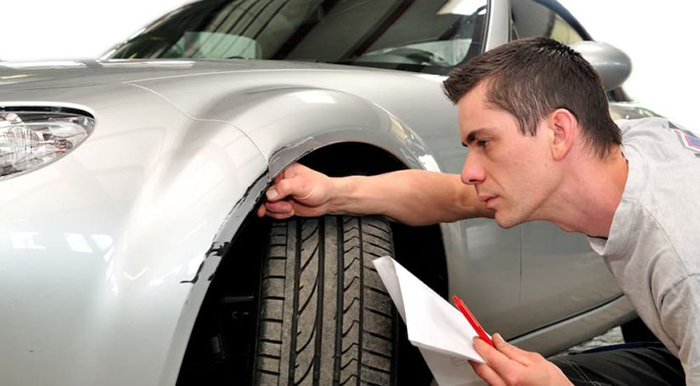
That perfectly aligned body panel? It’s hiding ₹2.5 lakhs worth of frame damage. One in three used cars has undisclosed accident history—and the difference between a safe car and a death trap is invisible to the untrained eye.
Walk into any used car lot in India, and you’ll see rows of gleaming cars. Fresh paint, detailed interiors, flawless exteriors. The seller swears: “Single owner, never had any issues, accident-free.” Three months later, you discover the truth—major structural damage, airbags never replaced after deployment, and a resale value that’s plummeted by 40%.
Accident history is the most concealed and most devastating issue in the used car market. Unlike odometer fraud or service gaps, accident damage doesn’t just affect value—it compromises your family’s safety every time you drive.
Why Accident Detection Matters
When a car is involved in an accident, the damage goes far deeper than surface scratches. Modern cars use crumple zones (parts designed to deform and absorb impact energy). Once activated in a crash, these zones can never perform that function again, even after repair.
In simple terms: Think of a car’s structure like a bicycle helmet. After one crash, even if it looks fine, the internal structure has absorbed the impact. It will never protect you the same way in a second crash.
The Financial Reality
A 2019 Hyundai Creta worth ₹12 lakhs with clean history becomes worth ₹7-8 lakhs if major accident history is discovered. That’s ₹4-5 lakhs lost instantly.
Value Loss by Damage Type:
- Minor cosmetic damage: 5-10% value loss
- Moderate damage (panel replacements): 15-20% value loss
- Major structural damage (frame repair): 30-50% value loss
- Total loss (insurance write-off): Essentially zero resale value
What You Need to Check
1. Visual Inspection
- Panel gaps: Should be 3-5mm consistent throughout
- Paint overspray: Look for body color on rubber seals and black plastic trim
- Door operation: All doors should close with same effort on both sides
- Spot welds: Factory welds are uniform and round; repair welds are irregular
Complete Visual Inspection Guide →
2. Structural Damage Indicators
- Frame straightening marks underneath
- Welding on structural points (frame rails, pillars)
- Misaligned suspension mounting points
- Wrinkled or buckled metal even after repair
Structural Damage Detection Guide →
3. Airbag Deployment Verification
Replacing deployed airbags costs ₹50,000-1,00,000. Many sellers reset the warning light without replacing airbags—your family rides with zero airbag protection.
What to verify:
- Airbag ECU scan (stores permanent deployment history)
- Replacement receipts for all deployed airbags
- Steering wheel and dashboard condition
Airbag Verification Complete Guide →
4. Insurance Claim History
Insurance records reveal accidents even when sellers deny them. A CarQ vehicle history report shows:
- All insurance claims filed (with amounts and dates)
- Claim types (Own Damage vs Third Party)
- Total loss declarations
- Cross-state claims that local checks miss
Insurance Claim Verification Guide →
Deep Dive Resources
For comprehensive understanding, read these detailed guides:
Accident Types & Value Impact →
Learn the difference between minor cosmetic damage (₹12 lakh car → ₹11 lakh) and major structural damage (₹12 lakh → ₹6-8 lakh). Understand frontal vs side vs rear vs rollover accidents and their specific indicators.
Visual Inspection Techniques →
Master panel gap measurement, paint overspray detection, color matching assessment, orange peel texture identification, and spot weld examination—all without special tools.
Structural Damage Detection →
Identify frame straightening marks, welding on structural points, paint overspray on underbody, new bolts on old structure, and wrinkled metal that reveals hidden damage.
Airbag Deployment Verification →
Understand how sellers hide deployed airbags (₹50,000+ fraud), what airbag ECU scans reveal, and why this verification is critical for family safety.
Insurance Claim History Check →
Learn to read claim documents, spot total loss indicators, understand multiple small claims patterns, and detect cross-state claim hiding tactics.
Your Action Plan
Never buy without this three-layer verification:
- Visual DIY inspection (free, 30 minutes)
- Panel gaps with finger test
- Paint overspray on rubber seals
- Door closing effort
- Spot weld examination
- CarQ vehicle history report (₹1,500-2,500)
- Insurance claim history
- Ownership patterns
- Service record analysis
- AI fraud detection
- Professional inspection (₹3,000-5,000)
- Paint thickness measurement
- Frame measurement
- Airbag ECU scan
- Underbody inspection on lift
Total cost: ₹5,000-8,000 What it prevents: ₹2-5 lakh overpayment + ongoing safety risk ROI: 2,500-5,000% return on investment
Key Takeaways
✓ Panel gaps reveal accidents: 3-5mm consistent = okay, uneven (7mm vs 4mm) = red flag ✓ Paint overspray on rubber seals: Body color on black rubber = repainted ✓ Insurance history is critical: ₹2,000 report reveals hidden ₹2-5 lakh problems ✓ Professional inspection mandatory: Paint thickness and frame measurement can’t be DIY ✓ Structural damage = walk away: Accept 40% discount or don’t buy at all
Ready to verify a car’s accident history? Start with a quick vehicle search to verify VIN and basic details, then get a comprehensive CarQ vehicle history report for insurance claims and AI-powered fraud detection.